Friday, November 27, 2015

Communion on the tongue - a sign of intimacy


With the alleged sacrilege of the Blessed Sacrament in Pamplona, there are many calls to revisit the manner of the reception of Our Blessed Lord in Holy Communion.

Here, after a spate of people running off with the Sacred Host, or the Host was found discarded, I moved the front row of pew kneelers forward and started giving Holy Communion there, rather than giving people Communion in a queue. It gave people more time to be a little more leisurely at Communion. People are free to receive Holy Communion kneeling or standing, in the hand or on the tongue. It is quicker, if people receive on the tongue I can pass on, if they receive in the hand, I can wait until the host is consumed. It is quite remarkable that when given the option people choose to receive kneeling and on the tongue. It is those of a certain age who tend to receive in the hand, or children at school who are told this is normative.

There is a certain power in the reception of Holy Communion in the traditional manner of the Western Church: kneeling and on the tongue.
I had an Indian priest staying with me and his bishop came and arranged to spend the weekend appealing for money in the local parishes. I had had to speak very sternly to him after he celebrated Mass here, he more or less made up his own Eucharistic Prayer, which barely reflected the Church's understanding of the Holy Eucharist, I think he had done his post-grad studies in Germany. In the evening we had a reception for some of the leading Indian Catholics in Brighton.

I am sure the Bishop was not in favour of the reception of Holy Communion on the tongue but he took great delight in giving tit-bits to the more attractive young women, insisting they didn't use their hands. I could understand why a young non-Catholic husband muttered darkly about 'punching his lights out', after the bishop had given his wife a third piece of honey coconut cake, I think it was the licking of his fingers by her, that he insisted on, that finally upset her husband. I managed to persuade him to take her home rather create an unpleasant scene.

Feeding someone in this way is an act of deep intimacy, it is the act of lovers and of parents of small children. It highlights in a very powerful way trust and union, it is an almost perfect sign of the intimacy of Holy Communion. It calls for an act of trust from the the recipient, in the sense of, "Which of you, if your son asks for bread, will give him a stone? Or if he asks for a fish, will give him a snake? Or a scorpion if he asked for an egg? ..."

Without any good reason, except the very nature of the intimacy of the relationship of Jesus and his disciples and the nature of the gift he was giving, I can quite easily believe that Jesus himself fed the disciple the Holy Eucharist directly into their mouths. It simply says a lot more about the nature of the Eucharist than handing something round on a plate or picking it up themselves.

Wednesday, November 25, 2015

The Secret Gnostic Key

There is rather good but not very revolutionary article on NLM about celebrating Mass, as we do here, ad Orientem. It merely says that doing so is 'normative', it is what the Missal expects. Nothing in the documents of the Second Vatican Council, nor the Missal of Paul VI expects any change to what for most of two thousand was considered normative. Why is something so clear in the Missal in 'pastoral' practice interpreted in arcane way, to the point where the 'normal' becomes the unusual, and those who actually do what the text clearly says are regarded as eccentric.

Their Lordships, the Bishop's of England Wales, want to change the new Extraodinary Form Good Friday prayer for the Jews. Ominously in the press release there is the phrase, "The Bishops of England and Wales have now added their voice to that of German Bishops", I do so hope our Bishops haven't jumped on the anti-Ratzinger bandwagon, promoted by their Teutonic brothers, because of course it was he who composed the prayer.

The prayer is based on Nostrae Aetate, which in its amazing brevity (is just over 1,500 words long) doesn't change the necessity for the Jews to be saved by knowing Jesus Christ, it doesn't throw away Pauline teaching, it doesn't suggest that the Old Covenant brings salvation or Eternal Life as does the New Covenant.

Just as the interpreters of the Missal seem to live in a world separated from the actual text, as some of the interpreters of Nostrae Aetate. It is worth reading Fr Bede Rowe on the subject, at the moment he is writing his doctorate on Catholic Jewish relations. As he says the implications are enormous

In trying to avoid charges of supersessionism, the Bishops are proposing an imperialist Christian definition of Judaism which straitjackets it into Christian terms. Oh, and subsumes all of the ‘Jews’ into one undifferentiated lot.
So what are the theological implications of the Bishops’ calls? A dual covenant theology, where one is ‘never revoked’ and the other, in Christ, is the one that we Christians go by? We would have to repudiate Dominus Iesus (2000), ignore Ad Gentes, rewrite the rest of Vatican II, reformulate our Christology and theology of redemption. This is just the beginning. Why should we ignore the covenant with all creation in Noah? How dare we bring the message of Christ to anyone… did not God make them all? Should they not all grow in their revelations of the divine?
What concerns me, again, is the change in the very nature of the Church, where it becomes not so much a Church of an open book, clear teaching but something which is controlled by specialist, to the point where the official documents and statements of the Church are of little weight compared to a new gnosticism revealed to a secret group of interpreters.
The separation of doctrine from pastoral practice is a new heresy that is rapidly taking hold of the Church, words do not say what they mean - which means we become enthralled to those who have a secret key, it is movement to a new clericalisation where only the chosen know the answer. If anything tells the ordinary faithful they are unwelcome it is this kind of arcana.

Saturday, November 21, 2015

A Place for the Damaged

3
A few thoughts in the light of the Pope's remarks recently about priests of whom he is afraid. It is really the second part of this post.

There is a small French Old Rite Community of nuns who have Downs Syndrome, The Little Sister Disciples of the Lamb, it is one of the many offshoots or affiliates of the Abbey of Fontgombault. I don't know if there are New Rite communities like these sisters. Somehow the Old Rite seems particularly able to respond to people like the Sisters of the Lamb.

At one time people with handicaps or with mental 'difficulties' or illnesses might not have become Choir Monks or Nuns, certainly if they could not cope with the Latin but if they were able to work they might well have been welcomed as a lay Brother or Sister. The change came in with renewal of religious life following Vatican II. Nowadays without a decent university degree many religious communities would simply not consider a prospective candidate and if there was a significant blip on one's 'psychological assessment', which now seems almost mandatory for every diocese and most religious communities, they are likely to be rejected.

It would seem that one of the things that some of the new traditional communities and some more traditional bishops of diocese have come up against is that they haven't sufficiently screened new community members or seminarians. This seems to be one of the reason why the Holy Father has demanded the resignation of some more traditional bishops and possibly one of the reasons for what has been termed the 'persecution' of the Franciscans of the Immaculate. One of the things the sacked traditional(ist) bishops and the Franciscans of the Immaculate have in common is they all attract large numbers of vocations. I can't help wondering if the problem has been that often they set the bar too low, as if they somehow think a religious community is a 'field hospital', that somehow living in an environment that is aimed holiness and where holiness is expected, that a prospective religious might be taught, if his or her heart is open, the ways of holiness

In contrast the Pope always sees priesthood in terms of function, and always a pastoral function. I am not sure he accepts that it is possible to be a priest or a religious in other terms, for example being an enclose contemplative, praying for the world, or being a scholar -he has often been quite unpleasant about them, or being a teacher of doctrine or a canon lawyer. In some German diocese for example, rather than being a pastor a priest might be very welcome as an administrator on a financial board or advisor on moral theology  in a hospital. St Paul reminds us there are a variety of gifts but always the same Spirit.

Today more than ever those who join seminaries or religious communities are likely to be damaged, more than their predecessors. Increasingly they are unlikely to come from stable families, they are likely to have had some sexual experiences, they are very unlikely not to have been exposed to pornography. In the past they might have been a little 'eccentric' or even 'difficult', now they are likely to be on some spectrum, slightly autistic or some other neuro-developmental disorder. Disorder is perhaps the important word here.

It should not be surprising that those who have had 'bad experiences' of the world are likely to desire communities or seminaries that offer a contrast to those experiences. A strictly enclosed community is likely to attract those who desire separation from at least some sector of society. Childhood sexual abuse might well add to the attraction of such a community, an absent or distant parent might well move someone to seek a community with a warm and loving superior. I remember a convert saying that what he found so attractive about the Catholic Church was being able to call a priest 'Father'.

Current psychological testing might well highlight such people as 'high risk'. If such a history is also marked by some sort of self harm, it is likely to flash quite a few red lights over such an application. Even the more Traditional Catholics might well no longer see a love of fasting or a desire for corporal penance as signs of holiness but perhaps Traditional communities are less likely to 'medicalise' these desires.

I can't help wondering whether Theresa of Avila with her psychological history might have great difficulty today finding any convent to accept her, if she also spoke of being 'divinely ravished', most vocation directors would suggest she sought some kind of long term specialist psycho-therapy. As for St Francis of Assisi ... or St Catherine of Sienna ... let alone the Cure d'Ars. Coming to terms with 'disorders' in the past was a source of holiness, now they are a medical condition.

The question the Holy Father raises is can a damaged man (or women) have a vocation? I would suggest that he might well say, 'it is impossible'. A Traditionalist would be 'yes', but in the proper situation and with the proper support. Someone with paedophile tendencies should never work with or near children but looking after the monastery garden or finances behind the walls, they might well grow in saintliness, with the neurosis that comes with age they might well become a pain for their Abbot or Abbess and possibly everyone else in the monastery, it gives the opportunity for heroic sanctity for everyone else, unless of course they become the superior themselves before they have become a saint.


follow on twitter:  @raylblake

Monday, November 16, 2015

After Paris - Europe


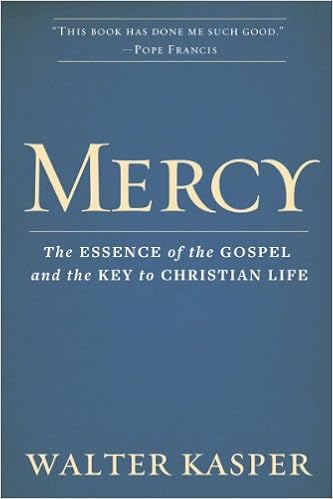
If we were Nietzschians we might see modern Liberal social values as the ultimate outcome of a post-Christian 'slave-morality': “abused, oppressed, suffering, unemancipated, weary and [those] uncertain of themselves”. Nietzsche would have seen our compassion "as weakness, as self-laceration". He would have seen Christianity as bad but post-Christianity as worst. The whole of German post-war theological muscle seems to be directed at the rejection of Nietzche's thought, in a sense it is part of the process of de-Nazification. Cardinal Kasper's 'Mercy' is part of this process, and perhaps a rather narrow understanding of European history viewed from Buenos Aires, with a short stay in Germany, might well see the whole of Europe's history through a lens of anti-Nazism - anti-Nietzchism.

What is the future of Europe after the Paris massacres? Closing of borders, the restriction of the 'free movement of people' seems to mark the beginning of the end of the European dream. The re-orientation of European politics from a tendency to the left to a movement towards the right seems inevitable. The election of Marine Le Pen seems, today, almost inevitable, as does the re-thing of the nature of Europe.

In Russia Putin has adopted the Orthodox narrative as a way of giving meaning and identity to a state that has been left empty and bankrupt by its 70 years of Communism. The search for British values of the Blair-Brown years failed because of the political difficulty of suggesting that British values might actually be Christian values was politically beyond them, they would have been laughing-stocks, Blair. publicly 'didn't do Christianity' though interestingly for both men 'Christianity' was their private personal answer.

Defining Europe today apart from territory is somewhat difficult, defining what it is not is perhaps easier. Poland and more significantly Hungary deciding that Mohammedanism is not compatible with their own values and history is unlikely to be followed by the rest of Europe, and yet the great struggle is how to define Christian/post-Christian Europe, without reference to Christianity. Christians/post-Christians alone make up the current European Community. Perhaps the reason we hardly noticed the 45 victims of terrorism in Beirut on Thursday is simply because they do not share our European civilisation, our European values.

Michel Houellebecq's 'Soumission', so interestingly after the weekend doesn't seem so relevant, it sees the Islamisation of France as political process, terror is not mentioned, and yet after the weekend Terrorism is unerasable factor in European attitudes to the outside world, it is likely to be a framework of European politics for sometime. Yet the simple truth is that our post Christian values are the source of our destruction,

Europe is dying because Europe is not having children, because Europe undermines the family, because Europe culture considers a naturally sterile homosexual relationship to be equal to a heterosexual relationship that is naturally orientated to produce children. Mrs Merkel in the maddest event of recent political history opened up the gates of Europe to every immigrant who might want to come, but the reason is simple without immigration Europe is dead because we are not replacing ourselves. Perhaps only a Catholic priest could dare to suggest that the peace and survival of Europe is dependant on a Europe that supports families and is open to children.


Saturday, November 14, 2015

Pray for Paris

"Show me just what Muhammad brought that was new and there you will find things only bad and inhuman, such as his command to spread by the sword the faith he preached." Manuel II Palaiologos (Byzantine Emperor from 1391 to 1425) quoted by Benedict XVI at Regensburg September, 2006.

To understand much of our present situation, the mess in the Church and in the world it is worth reading this extraordinarily perceptive speech.

Just a few thought going through my mind at the moment - The big one is can the West self destructive low birthrate ever be reversed?
But then - must the Church re-examine its relationship with Islam? Must the West? Where will it lead us? What will be the reaction of the majority, the secularists? How do we evangelise Islamists? Is the Church capable of it?

In many ways I think that this interview with Cardinal Danneels is not unrelated to what happened in Paris last night, it shows the self referential intellectual arrogance of many of Europe's Christian leaders, especially those who dominated the last Conclave.

Wednesday, November 11, 2015

Fr Michael Lang: A lecture on 'The Early History of the Mass'


A lecture on 'The Early History of the Mass', part of the Benedictus/Order of Malta/London Oratory collaboration 'Architecture of the Mass'. Rev. Dr Uwe Michael Lang C.O., is a member of the Benedictus Academic Team and expert in Church History. Michael is a priest of the Oratory of St Philip Neri in London, where he serves as Parish Priest, and a lecturer in Church History at Heythrop College, University of London. He is a consultor of the Office of Liturgical Celebrations of the Supreme Pontiff, and a former official of the Congregation for Divine Worship and the Discipline of the Sacraments. He has published in the fields of Patristics and liturgical studies, including the books Turning Towards the Lord: Orientation in Liturgical Prayer and The Voice of the Church at Prayer: Reflections on Liturgy and Language.
Signs of the Holy One

Living in Bubbles


That wise and learned old pedant Fr Hunwicke suggests that Popes should be married so as to avoid upsetting women. I am crusty old celibate but I have seen that look on a lady's faces when their husbands have said or done something foolish, that tight lipped smile which doesn't quite reach they eyes, which says, "I think we must have a talk later, dear", it is like the look rural American fathers might have, which says to their sons, "any more of that and we will have to visit the woodshed together".

One of the problems we celibates have is that we can live in our little bubbles, there is no-one there to burst it. Traddies live in a traddy bubble, liberals in a liberal bubble, conservatives in their conservative bubble. It is a bit like a man I met years ago, who said, "God heavens, Father, you are the first priest I've met who doesn't shoot". He then went on to say, "I know some who don't hunt but you are the first I have met who doesn't hunt or shoot". He then turned to his wife to acquaint her of his discovery, here my thesis breaks down, in that very English three syllabled form of the word, that reveals worlds, she responded, "Really?" In their particular world all priests rode to hounds or at the very least shot, it might have meant he only knew two or three priests but that was world he lived in.

Normally, having a wife means there is someone who stops you from being a prisoner of yourself. Ideally for a celibate his religious community or parish takes the place of a wife, if you let them, they become a key that releases from your prison, (though not always).

Edward Condon writing in the Herald asks, "Is Francis becoming the new prisoner of the Vatican?" Popes have almost always ended up becoming prisoners, as much as Chinese Emperors became prisoners of the Forbidden City or the Sultan became a prisoner of the Sublime Port. It was Benedict's increasing isolation, I am sure. lead to his resignation.

I know this is pure speculation but I wonder if the preferred candidate of the St Gall Mafia, would actually be a clear thinking articulate intellectual like Martini or someone whose thinking was muddled, who was not capable of communicating his ideas, or better had few ideas of his own. More importantly someone who for a few years would convince the Church that being in 'a mess' was the natural state, and whose every word was ambiguous and needed interpretation.

Under Benedict I read practically every word he said or wrote or said, often it was complicated and subtle but it was comprehensible. Francis, I read sparingly, partly because it is incomprehensible and to be honest I have never read anything that speaks kindly to priests - I cannot bear the constant nagging. Condon suggests that Francis is simply unaware of the effects of his words (or his actions) "This can be seen, for example, in the otherwise inexplicable decision to invite a man as compromised as Cardinal Danneels to the synod (on the family of all things!) despite the scandal surrounding his reported attempts to silence victims of sexual abuse."

Condon is right to draw attention to fact that the Pope in many ways has all the qualities of a 'prisoner',  "it came out that the Pope had not watched television for more than 20 years, did not use the internet, and read only one newspaper". If you add to that a limited pastoral experience, a limited knowledge of any language beyond Italian and Spanish, a limited knowledge of the Universal Church and limited intellectual interests - I am curious about the absence of books in the Papal study - does it perhaps mean that the Pope doesn't read much? Certainly his disdain for 'doctors of the the law', "Specialist of the Logos" and "ideologues" of various stripes would suggest an intellectual grasp of the faith is something antipathetic to him. Similarly, his sense that history, in terms of the Church the hermeneutic of continuity, is pretty meaningless to him, beyond his comprehension. Like many ecclesiastics of his age he seems to think the Church is a 'now event', with little sense of its past or very much more worryingly of its long term future.


Edgar EvansIn contrast to his predecessor he seems only to appoint those who share his views. Benedict had at the heart of his theology 'both and', Francis seems be much more factional, getting rid of those who disagree with him are invariable sent into outer darkness. The great problem with that is that ultimately you dwell in a tent surrounded with cronies, whilst those outside the tent are ...err... looking in.

The Lord’s descent into the underworld

At Matins/the Office of Readings on Holy Saturday the Church gives us this 'ancient homily', I find it incredibly moving, it is abou...