Showing posts with label bbc. Show all posts

Tuesday, November 21, 2006

C of E; Reformed and Catholic?


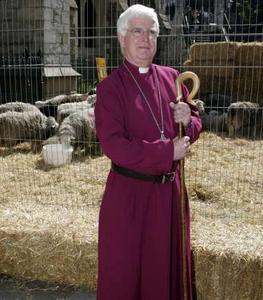
The Church of England’s Bishop Tom Butler, of the Nuffield report, see below, was on BBC's Thought for the Day today. He came out with the idea; I haven’t heard it for years, that the C of E is both Catholic and Reformed. He sited the fact that the C of E has lead the way in having the liturgy in the vernacular – four hundred years the Catholic Church followed, the ordination of married men – four hundred years later the Catholic Church allows married former Anglican clergy to be priests.
He suggested that the ordination of women as priests and bishops and the ordination of active homosexuals was also leading the way, indeed he suggested that there were already homosexual clergy in both the Catholic Church and the Anglican Ecclesial Communion.

The theological naiveté of men like Butler is dreadful indictment of the C of E. I mean not being able to distinguish between theology and discipline. Language and celibacy are not doctrinal issues; indeed the Catholic Church in its Oriental Rites has always allowed married priests and liturgy in the vernacular. Silly, silly man!

Of course there have always been homosexual clergy, the difference is that in the C of E homosexuality clergy are actively encouraged and the teaching, which comes from the Apostles, is actively rejected.
The introduction of women priests and bishops is a novelty, no Apostolic Church has done this before or is doing it now, and indeed the consensus amongst those Churches that are Apostolic is that the Church’s authority is limited, that Church is the servant of the Word of God not its master.

I do think that one of the marks of Apostolicity in the Church is that “from their place in Heaven the Apostle guide us still” (Preface of Apostles). None of those Churches that Dominus Jesus identifies as sister Churches either has women priests or bishops nor actively encourages homosexual clergy, it only happens in Protestant Churches which have broken from Catholic Tradition and Communion.

Friday, October 06, 2006

BBC bans the Cross


Fiona Bruce wasn't wearing her usual crucifix for 10 o'clock news last night. Insiders report staff on screen have been told not to wear anything that points to a political or religious leaning.
"It was argued that BBC staff on screen should not wear anything which hints or directly points to a political or religious leaning and that the cross contravened this and should not be allowed."
Now is this the first step to banning someone called Singh, because his/her name would point directly to their religious "leaning"? Or let us be more scary, maybe someone not just with a Jewish name but who looks Jewish.
I can understand Jack Straw's problem with covered faces, but a head scarf, a crucifix, a skull cap, a turban, a tattoo in the case of Coptic Christians, where is religious freedom?
Don't the dreadful BBC realise "people of faith", that is what we are known as these days, are licence fee payers.
I suppose if we don't bother to complain, what can we expect.
Have you done it yet?

Wednesday, October 04, 2006

So which of these men did not bother to complain to the BBC? - Leaked email

I have just received this leaked email from a BBC insider, dated today at 11:36am:
"There were 11 comments, 8 of which were along the lines of 'disgraceful and offensive' and 3 of which were along the lines of 'wonderful and marvellous'.I guess that's a pretty average number of phone calls for Panorama - but the comments were fairly detailed, rather than just being 'Unhappy' as usual."
l
l
I complained, about Panorama, and then also about the trailer on the News, apparently the Cardinal did, and Archbishop Nichols did and a few people on this blog say they did but most of the bishops didn't, maybe they though that Vincent Nichols' letter and the Cardinal's letter voiced their views. If that was so then I suppose it is alright for every other Catholic to think the same. Eight of us in the whole country bothered to complain!
What would have happend if it wasn't the Pope but some Grand Mufti or an Ayatola who was being accused of something similar by the BBC, I wonder how many complaints the BBC would receive.
One could substitute another group within society, the gay "community" for erxample, if there was an unjust programme made about them, how many complaints would be made?
.
.
As the BBC reckon one complaint = 100,000, viewers who would have similarly strong opinions, it just shows how important making known our views known is. If we don't then the opionion formers of our society get a way with spreading any lies they want.
I do think the Bishops have a very important responsible to encourage Catholics to come out from under the bed and make their voice heard. In the long run the credibility of the Church is as important as all those social issues that the bishops are continuing encouraging us to become involved in.
It is very sad, maybe Catholics in Britain don't care, if that is so then we are doomed.
But look on the bright side 8 of us did complain, we spoke for everyone else!

Tuesday, October 03, 2006

Complaing to the BBC (part 2)


Just in case you miss this in the comments box I thought I 'd repeat it here, it is from one of our parishioners who works in TV. She reminded me that the BBC News actually carried a trailer for this programme as if it was News.


It is very important that people write to the BBC and complain if they are dissatisfied with the Panorama programme or in fact with any of the other programmes on the BBC. The BBC (and all the terrestrial broadcasters) take complaints and comments very seriously particularly as it is generally believed that each comment received from the public represents the opinions of 100,000 other people. Each comment will be dealt with individually and possibly followed up by OFCOM. Personally, my major grievance with the Panorama programme is not the editorial content of the actual programme but the exploitative tactics used by the BBC to promote the programme. I think it's unconscionable that any broadcaster is permitted to promote a programme in mainstream news bulletins under the banner of 'genuine' news. Unlike the accepted editorial bias of the newspapers, I believe it is imperative that news coverage on television remains neutral and objective. For what it’s worth, I don’t believe that the BBC is anti-Catholic, I think it is just another pitiful example of the lengths that a public funded broadcaster will go to, to produce sensationalist programmes in a bid to win the ratings war. The only good news I can give you is that the new episode of Cracker on ITV1 on Sunday night got 8.1 million viewers and Panorama only got 2.5 million.

BBC admits failings in coverage of Pope furore

I found this in this weeks Catholic Herald
The BBC has admitted to screening out positive comments in favour of the Pope on its website during the furore over the Pontiff’s Regensburg lecture. A BBC editor accepted last week that comments opposed to the Pope were chosen to advertise the website debate forum rather than more popular comments of support. Although twice as many comments posted on the “Have Your Say” section of the website supported rather than criticised the Pope, the two quotes displayed on the news stories to advertise the forum were both opposed to the Pontiff. Vicky Taylor, editor of the interactive section of the website, admitted on the BBC’s Newswatch programme that precedence had been given to contributions that were critical of the Church. “I accept the point that [the quote] needs to reflect more of our comments,” she said. “We should have changed that quote around more – often it’s down to resources. We will try a little harder on that.” The “Have Your Say” advertisement quotes are picked on the basis of viewers’ recommendations, but the anti-Pope quote that was chosen was recommended by fewer than half the number of viewers that recommended a comment in support of Pope Benedict.

Complain to the BBC (part 1)


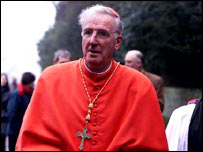
Cardinal Cormac Murphy-O'Connor has expressed his "enormous distress and alarm of the Catholic Community" over the BBC Panorama 'Sex crimes and the Vatican' programme. The text of his letter to Mark Thompson, Director General of the BBC follows below.

Dear Mr Thompson,
In May 2005 I wrote to congratulate the BBC on its coverage of the death and funeral of Pope John Paul II and the election of Pope Benedict XVI.
It is with deep disappointment that I now write to express the enormous distress and alarm of the Catholic community at your decision to broadcast Sex crimes and the Vatican. No-one can deny the devastating effects of child abuse in our society and the damage inflicted on the victims and their families. This is particularly shameful if such abuse is committed by a priest and it is of course legitimate to portray heart-rending elements of this evil.
However, your programme sets out to inflict grave damage on Pope Benedict, the leader of a billion Catholics throughout the world. It is quite clear to me that the main focus of the programme is to seek to connect Pope Benedict with cover-up of child abuse in the Catholic Church. This is malicious and untrue and based on a false presentation of church documents.
I cannot understand why no-one from your Corporation made any attempt to contact the Catholic Church in this country for assistance in seeking accurate information about this matter. I must ask if within the BBC there is a persistent bias against the Catholic Church. There will be many, not only Catholics, who will wonder if the BBC is any longer willing to be truly objective in some of its presentations. What a pity if the respect in which the BBC is held worldwide were to be seriously undermined by the bias and lack of integrity shown in the decision to broadcast a programme such as this.
Yours sincerely
Cardinal Cormac Murphy-O'Connor
President of the Bishops Conference of England and Wales
Archbishop of Westminster

Why not complain yourself to the BBC at
http://www.bbc.co.uk/complaints/

Monday, October 02, 2006

Sex Crimes and the Vatican


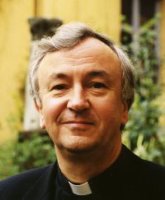
"The BBC Panorama programme, 'Sex Crimes and the Vatican', makes clear the suffering of those abused in their childhood. But as a public service broadcaster, the BBC should be ashamed of the standard of the journalism used to create this unwarranted attack on Pope Benedict XVI.
"Viewers will recognise only too well the sensational tactics and misleading editing of the programme, which uses old footage and undated interviews. They will know that aspects of the programme amount to a deeply prejudiced attack on a revered world religious leader. It will further undermine public confidence in 'Panorama'.
"There are two strands to the Panorama programme 'Sex Crimes and the Vatican'. The first is a graphic and explicit account of the evil of child abuse and the personal damage it causes to its victims. This is horrific and deeply distressing.
"Those abused as children have been grievously offended. This is especially so when the abuser is a priest. The film is a reminder to everyone of the need to work ceaselessly in the protection of children and in response to the needs of victims. The Catholic Church in England and Wales is doing so, with transparency and care, and, in every case, cooperating fully and immediately with public authorities.
"The second strand of the programme is an attack on the Vatican and specifically on Pope Benedict XVI. This aspect of the programme is false and entirely misleading. It is false because it misrepresents two Vatican documents and uses them quite misleadingly in order to connect the horrors of child abuse to the person of the Pope.
"The first document, issued in 1962, is not directly concerned with child abuse at all, but with the misuse of the confessional. This has always been a most serious crime in Church law. The programme confuses the misuse of the confessional and the immoral attempts by a priest to silence his victim.
"The second document, issued in 2001, clarified the law of the Church, ensuring that the Vatican is informed of every case of child abuse and that each case is dealt with properly. This document does not hinder the investigation by civil authorities of allegations of child abuse, nor is it a method of cover-up, as the programme persistently claims. In fact it is a measure of the seriousness with which the Vatican views these offences.
"Since 2001, Cardinal Joseph Ratzinger, then Head of the Congregation for the Doctrine of the Faith, took many steps to apply the law of the Church tallegations and offences of child abuse with absolute thoroughness and scruple."
Archbishop Nichols added: "This statement is endorsed by the Bishops of England and Wales. Cardinal Cormac Murphy-O'Connor, as President of the Bishops' Conference, is writing to the Director General of the BBC, Mark Thompson, to protest about this programme. Cardinal Murphy-O'Connor's letter will be made public later this week."
Fr Tim Finigan offers alink to the texts and a commentary of the document the BBC referred to continually but never quoted.
John Allen in 2003 offered a good analysis of Crimen Sollicitationis. Here is the text of Crimen Sollicitationis in Latin. Here is the text of Crimen Sollicitationis in English.

A bit more on this programme


So what was the BBC up to last night in its programme on clerical child abuse? This was another of those programmes that dealt with clergy child abuse, it spoke about a conspiracy of silence and the widespread practice, in the past, of moving priest abusers on from parish to parish, it present several cases from Ireland, from the US and from Brazil. It blamed a secret document, Crimen Sollicitationis issued in 1962, for this conspiracy. It tried to implicate the Pope on rather flimsy grounds.

I find the whole issue of clerical abuse of children, deeply disturbing, not just because it damages children, we should never underestimate, the extra-ordinary damage it does to the child, the pain reverberates down the decades. It is also a sacrilege under so many headings, first of all against the innocence and trust of the child, against the priesthood, against the sacraments, especially of the Eucharist and presumably Penance too, and against the message of Christ.

When I was a seminarian in the 70s and early 80s the assumption was that this never happened in the Catholic Church, if it did it was incredibly rare. It wasn’t until the mid 80s that the Church was rocked by the organised abuse that was revealed in Catholic children's homes in St John’s, Newfoundland, then bit by bit over the next decade more and more stories broke, the most horrific in Ireland and the United States, as well as this country. I am told that the first serious academic study of abuse of children wasn’t made until the late 70s.

The assumption of the programme was that there was deliberate cover-up, I am sure there was, and I am sure too that a document issued in 1962, which I have never seen, would reflect and reinforce the culture of the time. I am sure that it sought to minimise the scandal and limit damage as much as possible. We should compare attitudes to abuse and attitudes to rape at this period, sexual crime was taboo. The prevailing thought was that somehow not only the perpetrator but the victim too was somehow to blame, in the case of rape the victim so often craved secrecy, so it is not difficult to see parents willing colluding with the Church in cover-up and simply wanting the abuser moved on, with no thought ever of punishment, let alone the publicity that would come with criminal trial.

The attitudes in the Church at the time reflected society but were further compounded by the unique relationship of priest and bishop, which was expressed not in terms of manager and managed, but in the biblical terms of father and son, and if the son were prodigal, so much more was a good father called to be merciful, and even try to excuse his crime. Here I make no excuse for bishops, some of whom acted criminally to protect their clergy, but it is important to understand the motivation. I think a Bishop, now, would place the victim first in his heart.

The accusation against the Pope though, I think is unfair, and no evidence was presented for it. The programme accused him of re-issuing Crimen Sollicitationis, in 2002 and amending it to say that all cases of clerical child abuse had to be referred to Rome. This was in fact another document, that meant all such cases had to be reported to Rome, The reason was that so many diocese and religious orders handled such cases badly, and may have been part of the problem, it certainly did not remove the case of from civil authorities but meant that the Church, in it its own courts also tried the perpetrator.
The reason why the document instructs bishops to keep such cases secret is that the Church unlike the BBC believes that guilt has actually to be investigated and proved, rather than merely assumed, even here "secrecy" seems to be more about being discreet, whilst an investigation is in place.

The Pope marked the beginning of his pontificate by banishing the 90 year old founder of the powerful Legionaries of Christ from any public act, because of the charges which had been brought against him. From what I understand the number of depositions from the clerical state (de-frockings) has risen greatly in Benedict’s pontificate.
This was just bad journalism, the BBC at its journalistic worst.

The Lord’s descent into the underworld

At Matins/the Office of Readings on Holy Saturday the Church gives us this 'ancient homily', I find it incredibly moving, it is abou...