I thought this was such a good comment and one that I totally agree with, I didn't want anyone to miss it.
There is a very beautiful celebration of Mass by the Pope 20th April 2005, day after his election on the sidebar link to the Vatican Video Archive, a single cantor sings the entrance antiphon, the rest of the proper of the Mass and the Cardinals join in the Ordinary, it is very austere, very prayerful and deeply moving. I also think it is how Mass should be celebrated.
Anonymous said...
I've often wondered why we sing hymns at all at Mass when composers in the past set the five sections of the Ordinary and way back the "Ite missa est' too. Mozart, Haydn, Beethoven, Schubert, Dvorak are not famous hymn writers though they all wrote Mass settings and motets. The hymns we have serve no purpose than to fill up bits of the Mass when we could have some silence with a whole pile of extra words - don't we have enough to dwell on?! (A bit radical. I suggested this to a friend and she did look a bit shocked.)
Four part strophic hymns are as far as I can see a Lutheran invention and though the Chorales by Bach provide an excellent vehicle for Music students to learn the fundamentals of harmony ( if only the modern hymn writers had studied them....)they aren't exactly Catholic. We don't take passages from the services of other Christian denominations into the Mass, so why take the music?
Also, for example, modern settings of the Gloria in English, tend to turn it into a verse chorus form when again composers in the past set the words without doing this. Surely, if we were supposed to keep repeating the opening as a refrain, then the text would have been passed down to us in that form? There seems to be a free for all with texts that should presumably be treated with the utmost care and devotion.
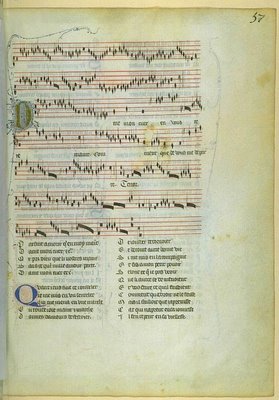
Plainsong has so many remarkable attributes; passed down a millennia in notated form and definitely before that as an oral tradition, no named composers so no egos involved, woven into the fabric of medieval, renaissance and later polyphony, the melodies worn smooth by the centuries, restricted vocal range making it easy to sing .... and that's before you consider anything to do with its rightness for the liturgy.
I'm very tempted to give a monster rant on the thankless task of being the Head of Music in a Catholic school and what it's like having to play all the grating rubbish, knowing that Catholic Sacred Music is truly the best music created by western man .... but that isn't really the point. (Yes, I did try to do 'proper music,' no it was not particularly welcomed.) A great deal of the music used in schools and parishes doesn't do the job. It isn't devotional, it is very poor quality (that's the music, not how it is played,)and I don't blame people for not singing. Maybe congregations want some silence to pray. If you only go to Mass on Sunday, why would you want to sing some trite Communion hymn when you've got 5/10 precious minutes to say your prayers? Maybe the folks in the pews know instinctively what you are articulating, Father.

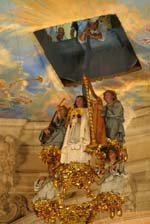 The d'Elx Mysteri Play, about the Blessed Virgin's Assumption was performed on Radio 3, on Saturday "they called it Elche", listen.


