Thursday, December 05, 2013

Obituary: Alison Davis

Alison Davis
I tend not to lift entire pieces from other people publications, I make an exception here, it is the Catholic Herald's obituary by Francis Phillips for Alison Davis:

Alison Davis was born with spina bifida. She later developed conditions including osteoporosis, arthritis and chronic obstructive pulmonary disease. Coping with these permanently disabling and painful conditions dominated but did not define her life. Indeed, they led her to champion the rights of the vulnerable, the disabled and the unborn, first as an atheist and then as a Catholic.
Her early adult life was marked by a determination to live as normal a life as possible, despite having to use a wheelchair. She studied sociology at university, where she stopped believing in God. Writing about this period of her life in a paper she delivered to a New Zealand Family Life International Conference in 2009 she was honest: “It was largely because I wanted to live a lifestyle I knew was incompatible with the Christian faith.” She married young, in 1975, but after ten years in which she “tried very hard to find happiness without God”, the marriage failed.
At university Alison had strongly supported a woman’s right to choose abortion but her attitude changed after she read of the case of a baby girl, Louise, born in 1979 with the same disabilities as hers, who had been deliberately starved and dehydrated to death by Dr Donald Garrow of the High Wycombe Hospital. The case, which received wide publicity at the time, shocked her to the core.
In 1981 the Guardian published a letter in which she criticised the killing of newborn disabled babies. The Society for the Protection of Unborn Children (SPUC) contacted her and argued that killing the newborn disabled was a consequence of killing the unborn. Alison was reluctant to give weight to SPUC’s arguments but within a couple of years she accepted them and became pro-life. From 1983 Alison worked full-time for SPUC’s newly developed Handicap Division (its name was later changed to No Less Human), for disabled people as well as their families and carers, and became a major commentator on anti-life policies which discriminated against disabled people.
John Smeaton, chief executive of SPUC, writes that “In spite of serious illness [Alison] continued to write, publish and broadcast on the eugenic nature of the Abortion Act and on healthcare and government policies, including major interviews on BBC’s Newsnight, the World Service’s Heart and Soul: Choosing Life series and leading letters in the national newspapers.”
In 1985 her marriage ended and in the following years a number of serious personal difficulties resulted in her making several suicide attempts. Yet paradoxically, she also started to search for religious belief. Having studied other world faiths, she turned to the Bible. “I began to think it could just be true,” she wrote. In 1986 she went to Scotland to stay with the prominent pro-life priest, Fr James Morrow of Humanae Vitae House in Braemar. He taught her to say the Rosary and she attended Mass in his chapel.
Yet the road to the Church was not easy and Alison still struggled to find meaning in life. Joining a pilgrimage to Lourdes she began to understand that she and the other sick people there were very much loved by God in their suffering. In 1987 she met Colin Harte who was working for SPUC. From 1989 he was her devoted companion and carer for the rest of her life; indeed, it was Alison’s conviction that pro-lifers should not compromise and exclude disabled babies in attempts to lower the abortion upper limit (as happened with David Alton’s 1987-88 Bill) that led Harte to question the whole basis of incremental legislation and to write his own book on the subject, Changing Unjust Laws Justly; Pro-Life Solidarity with the Last and the Least (2005).
During a second pilgrimage to Lourdes Alison learned for the first time that suffering need not be wasted; it can be offered up to God on behalf of others. She became increasingly drawn to Christ in the Blessed Sacrament. Finally, on Easter Sunday, 31 March 1991, she was received into the Church.
Although Alison knew she had “come home”, being a Catholic brought its own difficulties. She discovered some churches couldn’t accommodate wheelchair users and she sometimes experienced an acute sense of rejection. She learnt that her Faith would not remove the sorrows of life but that it does provide the grace and strength necessary to live with them. A visit to Calcutta over Christmas in 1991, and witnessing the love a pavement-dwelling family had for their tiny baby, brought home to her the infinite value of each human being created by God.
In 1995, with Colin’s help, she set up a charity for disabled children in South India. It gave her a sense of purpose in life that radically transformed the ensuing years. This changed perspective taught her the danger of euthanasia, which encourages people to make ultimate choices at a low point in their lives, on the assumption that it will never change for the better.
As someone who lived a life of considerable suffering, Alison often spoke of the opportunity to share in the sufferings of Christ, not merely as a privilege but as “the greatest privilege in the world.” Shortly before her death Colin Harte wrote, “Alison frequently heard it said after someone had died, ‘At least his (or her) suffering is now over.’ She asked me several times not to let anyone say that after she died, because she felt it diminished the particular gift she had to offer God. The Church provides a beautiful and profound teaching on suffering, but for many Catholics there is little understanding or appreciation of it. Alison’s life of intense suffering – physical, social, emotional, mental and spiritual – is an exceptional witness to the privilege and dignity of suffering in union with Christ.”
May she rest in peace

Tuesday, December 03, 2013

Messy Church


Is there a new Franciscan Ecclesiology? It seems as if orthodoxy is now no longer a requirement in the Catholic Church that we should recognise 'what is' rather than insist on 'what should be'. Pastoral realism seems to be what Pope Francis is insisting on. Every bishop, every priest, every informed lay person knows that there is great gulf between 'what is' and 'what should be'.


The Pope talks about not refusing baptism to the children of those who are not married or divorced and remarried, this might be an issue in Argentina but I know of no priest in England and Wales who would refuse baptism on that issue. The vast majority of those I marry are living together before marriage, some chastely but most, I assume, not. Contraception, or even early stage 'contraceptive' abortion are as normal amongst Catholics as non-Catholics according to various surveys. Those in 'irregular unions' or 'same sex unions' seem not to understand the Church's teaching, or have rejected it. Many priests who might want to adopt a position on these issues know that they would not be backed up by their bishop and that their brother priests are happy to turn a blind eye, it is  difficult to be the odd one out, and effectively put people in 'bad faith' or in a state of simple confusion if most bishops and priests are 'pastoral'. The Church is after all about Communion, we are not Presbyterians, where individual priests do their own thing without reference to the head of the local Church. We are 'in Communion' with Christ and his Church because of our Communion with our Bishop, every Mass is an act of Communion with the local Bishop.

Sandro Magister speaks of 'a Federal Church' and draws on two issues raised by Francis' Exhortation, a) Synodalism and local bishops meeting in their Episcopal Conferences and exercising doctrinal autonomy, b) Enculturation and the de-Westernisation or de-Helenisation of Catholicism, both of which were opposed by rigorously by Benedict XVI.

Benedict represents the tidy centralised Church, Francis the messy decentralised Church, 'Go back to your dioceses and make a mess'. The great problem is that the we Catholics have no experience of a decentralised Church, like David Cameron's 'equal marriage' it is an untried experiment. Already, as Magister points out, priests are being sent home from the Roman dicasteries, heads of certain formerly powerful dicasteries have not been appointed. The CDW is one example, in a decentralised Church, presumably the local bishops will decide on how liturgy is celebrated in their local Churches, and dare I suggest, following the principle of lex credendi lex orandi, what doctrines are celebrated.

As Catholics we believe that no Bishop even the Bishop of Rome can change doctrine but any Bishop can choose to ignore certain doctrines or simply downplay them.

I am not sure what is going on in the tussle between Mueller and Zollitsch both sides claim to have the Pope on their side, perhaps both do, perhaps the Pope just wants them to sort things out between themselves. It is interesting that no pressure, as far as we know, has been put on the German Bishops to change their permission to issue abortiofacients in German Catholic hospitals. Our experience over the last 50 years is that what starts in Germany spreads to the rest of the Church.

I am anxious about the phrase 'genuine doctrinal authority' Pope Francis hasn't explained it. Could it mean that German bishops might decide to establish a rite for the ordering (rather than ordaining) of deaconesses on their 'genuine doctrinal authority', can it be kept in Germany? What will stop them from allowing inter-communion with Lutherans, or for that matter Concelebration with them, which already happens in some places in Germany, why should it not spread to other national Churches?

The problem is that doctrinally in many parts of the world doctrinally the Church is in a mess, unlike the Orthodox Church we Catholics do not have a strong sense of being part of an ancient Tradition or even much sense of Unity, indeed our 'Tradition' has been to throw out babies with bath water.


Alison Davis - pray for her

At the the meeting of the Guild of the Blessed Titus Brandsma on Saturday I asked for prayers for Alison Davis, the leader of No Less Human, this morning Alison died. Pray for her.

Those who cared for her and knew her in recent years believe her be great saint, in that she wished conform her life to Cross of Christ, embracing it, loving it, finding meaning and hope in it - pray for her and for those who loved her, especially Colin Harte who is the picture with her on her last visit to her beloved Lourdes.
See John Smeaton


Monday, December 02, 2013

Pope says, Jesus 'pretends'


Jes·u·it·i·cal
adjective

of
 or pertaining to Jesuits o
r Jesuitism.
( 
often lowercase ) 
practicing casuistry or equivocation; using subtle or oversubtle reasoning; crafty; sly; intriguing.
Or as the say you can take the Jesuit out of the Jesuits but not the Jesuit out of the Jesuit.

On Saturday Radio Vatican said, Pope Francis had said,
“In the Gospel, Jesus does not become angry, but pretends to when the disciples do not understand him,”
The ancient Fathers would baulk at such a suggestion, I can't think of one who would be be comfortable with the idea that the Gospels did not reveal the plain meaning of what Jesus said and did, it is only the Jesuits of the 17th century who would begin to suggest otherwise.
There is no suggestion in the Gospels that Jesus feigns, or pretends anything, on the contrary he is the 'Truth', he says, "Let you 'yes' mean 'yes' and you 'no' mean 'no'". His Kingdom stands in contradistinction to that of the kingdom of the Father of Lies.
If Jesus really does 'pretend' to be angry but isn't really what else does he pretend? Is he really just 'acting' in other emotional responses, when he sighs, when he weeps, when he rails against the Pharisees. Is he really grinning broadly when he calls Simon Peter, 'Satan'?
I do not agree with Pope Francis on this, we do not need smiley or angry face marks to interpret the Gospels.
Perhaps this says more about the Pope than it does about Jesus. Rather than Jesus pretending, is Pope Francis 'pretending'? After all if one believes the Son of God can and does 'pretend', why shouldn't the Pope? and if the Pope can 'pretend', why not the Church?
I really do think this is a very big issue, the ramifications run very deep, the implication is that the plain meaning of scripture is not readily available to the ordinary reader or hearer, it also means that for ordinary Catholics it is alright to 'pretend' for affect or for some other reason. If Jesus did it, why is shouldn't the Vatican Bank in its accounts or a Bishop defending his diocese against accusation of sexual abuse of minors, or why not a divorced and remarried Catholic 'pretend' and receive Communion anyhow. If 'pretending' is alright, why not hypocrisy, or downright lying?

Friday, November 29, 2013

One for you and one to evangelise with


I haven't finished reading Evangelii gaudium, I must admit, I found the Pope Emeritus easier to read, some bits of the Exhortation I find incomprehensible, the stuff on 'not spheres' 'but polyhedrons' seems as arcane as Pythagoras, what does it mean? Then other bits and pieces seem to be a rehash of twentieth century speculative theology, like the bit about atheist salvation. I am sure at the end there will be a bit on Mary the Evangelist, maybe I am being Promethean.

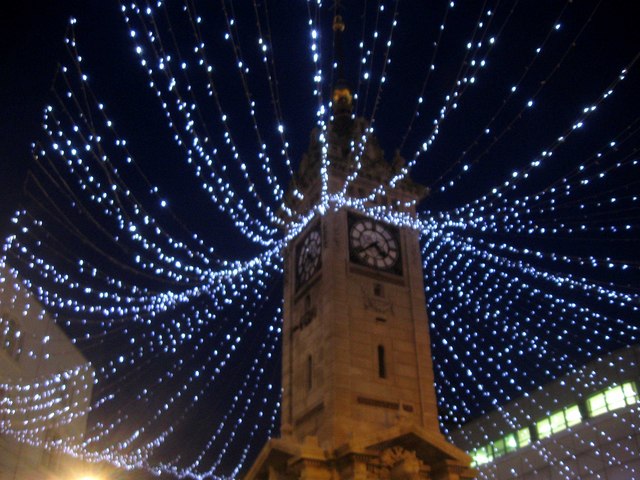
Here, at 7pm on 7th December, next Saturday, we are having our annual -we did it last year- procession in honour of the Immaculate Conception, we are going from the Church to the Clocktower in the centre of town, there we are going to say Pope Francis' prayer for the Consecration of the World.


Last year we had just under a hundred people, this year I am sure Our Lady will increase the numbers. What was so noticeable last year was the degree of enthusiasm with which the procession was met, Chinese and Pakistani waiters left their restaurants just to watch the procession pass, a few Spanish students joined the procession. Last year we handed out those cheap plastic Rosaries along with how say the Rosary cards, this year it is Miraculous Medals and a thing the Copts Orthodox here in Brighton do, so 'people will remember the sweetness of Christ' we are going to hand out sweets. Evangelisation should be about 'sweetness', I hate those sour 'marches for Jesus'.

We got hold of a thousand Miraculous Medals, I gave out about 300 hundred at Mass last week, on the basis of 'one for you and one to evangelise with' I could have given out lots more, people wanted them, not just for themselves but yes, to evangelise with.

The Church's sacramentals are a good thing to be generous with, I like to encourage people take palms and blessed candles home for the sick or lapsed, every year I keep meaning to get hundreds of little plastic bottles for Paschal Water for the same purpose and I have looked at getting quantities of bambini for distribution at Christmas, I haven't yet found a cheap supply. Books and pamphlets are useful but 'things' I suspect are a more useful way for people to begin a conversation about faith or prayer and their experience of the mercy of Jesus.

In the great days of Catholic evangelism the 'model' was invariably a Marian, one of simply showing Jesus, in Gospels it happens in the Visitation, with the Shepherds, with the Wise Men. The great shrines of Lourdes and Fatima are also great centres of evangelisation, she introduces people to the mystery of Christ.
Having just peeked at the end of E.G. the Pope doesn't exactly say that, but it works.

Mary is always lavish in her giving!

Thursday, November 28, 2013

Self-absorbed Promethean Neo-pelagianism


What does "self-absorbed promethean neo-pelagianism" mean?
It is phrase Pope Francis has used elsewhere but it appears again in Evangelii Gaudium
94. This worldliness can be fuelled in two deeply interrelated ways. One is the attraction of gnosticism, a purely subjective faith whose only interest is a certain experience or a set of ideas and bits of information which are meant to console and enlighten, but which ultimately keep one imprisoned in his or her own thoughts and feelings. The other is the self-absorbed promethean neopelagianism of those who ultimately trust only in their own powers and feel superior to others because they observe certain rules or remain intransigently faithful to a particular Catholic style from the past. A supposed soundness of doctrine or discipline leads instead to a narcissistic and authoritarian elitism, whereby instead of evangelizing, one analyzes and classifies others, and instead of opening the door to grace, one exhausts his or her energies in inspecting and verifying. In neither case is one really concerned about Jesus Christ or others. These are manifestations of an anthropocentric immanentism. It is impossible to think that a genuine evangelizing thrust could emerge from these adulterated forms of Christianity.
Notice first he uses the them as the other extreme to gnosticism, those "whose only interest is a certain experience or a set of ideas and bits of information which are meant to console and enlighten, but which ultimately keep one imprisoned in his or her own thoughts and feelings." I presume here he is speaking about 'cafeteria' or 'pic n mix' or 'feel good' Catholicism, a Catholicism without traction, that simply gives comfort or backs up one's own worldly ideas.

On the other extreme then is the "self-absorbed promethean neopelagianism".


'Self-absorbtion' is obviously contrary to the Gospel, it is as remote from the teaching of Jesus as masturbation is from the loving, life-giving, self giving encounter between husband and wife, it is a denial of the Great Commandment to love God and our neighbour.

'Promethean' is slightly more difficult. Prometheus was a Greek demigod who created man from clay and gifted him with fire, for which he was punished by Zeus who chained Prometheus to a rock where a vulture came and daily fed on his liver.

The term "Prometheism" was suggested by the Greek myth of Prometheus, whose gift of fire to mankind, in defiance of Zeus, came to symbolize enlightenment and resistance to despotic authority, it was the name of an early 20th century slightly anarchic Polish political movement but it drew its inspiration from the enlightenment which is perhaps significant here. Perhaps what the Pope is suggesting is something individualistic, something which is actually contrary to Catholic Tradition. It is the self-righteous or as the Pope would say, 'self-referential', pretentious Phariseeism that quotes documents and texts to condemn others but actually refuses to be converted by them.

"Neopelagianism" is an easier term, it excludes the necessity of Grace for salvation, again it is individualistic, again it excludes a dependence on God, which is at the heart of Francis' preaching on 'mercy'.
He links the whole phrase to those who, 'observe certain rules or remain intransigently faithful to a particular Catholic style from the past'. He has used 'neopelagian' previously to describe certain traditional Catholics, well actually the SSPX. I think what he is saying, which the whole of Evangelii Gaudium seems to be saying is that we have be absorbed into the wondrous life-changing joy of the Gospel of Jesus Christ rather than being curators of a museum or experimenters in a laboratory.


The whole of the document seems to be a call to the centre, not as we would like it to be but as it actually is. Whenever I read Francis I feel like a schoolboy in privileged Jesuit school being given a pep talk by the headmaster, in which I am being told of the importance of everyone pulling together not so much for  the good of the school but ultimately for the greater glory of God, Ad maiorem Dei gloriam.

There is always the sense that we are not doing well enough. A friend of mine reminded me that at the heart of Jesuit spirituality was the twice daily examen of conscience, on how prayer and everything else affects our living the Gospel.

Wednesday, November 27, 2013

Bishop Anthanasius Schneider in Cork

Bishop Anthanasius Schneider will offer Mass in the Old Rite at the historic Honan Chapel in University College Cork this Saturday at 11.00am, everyone is welcome.

This is significant for several reasons:
  • It is the first Traditional Rite Mass there in forty years.
  • He will launch a new book, "Corpus Christi - Holy Communion and the Renewal of the Church
  • Perhaps most important, it is a deliberate policy statement by the newly appointed Dean and Chaplain about the future direction of the Catholic mission in the University College Cork and the use and purpose of this beautiful chapel.
Since September the recently ordained Dominican Fr :David Barrins has been Dean and Chaplain.

The Lord’s descent into the underworld

At Matins/the Office of Readings on Holy Saturday the Church gives us this 'ancient homily', I find it incredibly moving, it is abou...