Monday, November 13, 2017

"Has it worked?" the question we dare not ask


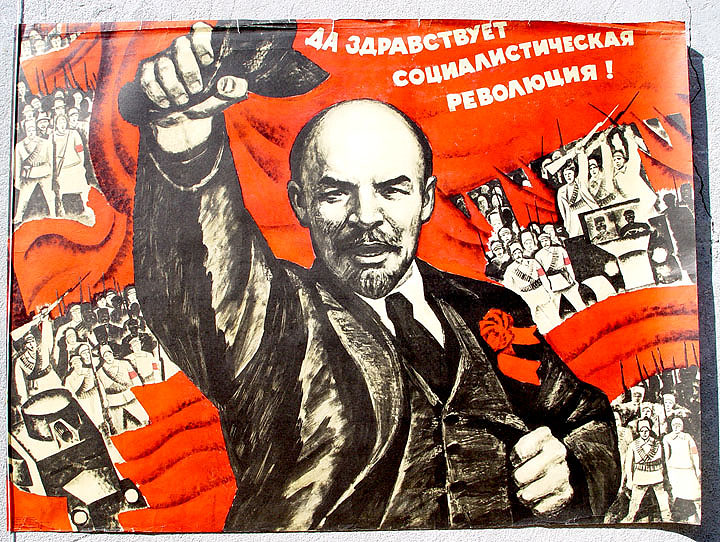
In this centenary year of the Soviet Revolution, it is worth reflecting that after 70 years the Russian people actually asked the question, "Has it worked?" It is the question an efficient business asks regularly, I suspect parents in a healthy family ask that question. it should be the fundamental question of the spiritual life.

Fifty years after the implementation of the liturgical changes, it is the question the Church should be asking itself, any business would have product tested before a change of brand. I suppose that Summorum Pontificum was Benedict's way of doing this retrospectively.

Vatican II's liturgical reforms were introduced en masse everywhere and within a few years of the Council, unlike the gradually introduced liturgical reforms of Pius V that percolated gradually as old books were slowly replaced but even then only where the Roman Rite was used, the Milanese, Lyonese, Bragans, Dominicans, Carthusian, for example, continued using their own Rites, and acted as a kind of quality control or reference point for the reformed Roman Rite.

There are two areas where, 'has it worked?' should be asked, the first is liturgical reform, the second is the modern use of the papal fiat that introduced them, it was an unprecedented use of papal power. The second of these, Pope Francis is dealing with very effectively by forcing even the most conservative to ask about the modern use of papal power, "has it worked?". I half think that it is a deliberate policy, a reductio ad absurdum, that the Pope is raising with allies like Fr Spadaro and Dr Ivereigh and other cheerleaders. Are they cooperators who will heroically sacrifice their careers in a successive papacy. Dare one suggest that Magnum Principium might actually be a return of the Church to local Rites and Usages that are mutually enriching? I suspect not but it is a possibility. The Ordinariate Rite after all seems to have this effect where it is celebrated.

Apparently a large number of French Seminaries are closing, as are a whole lot of ancient monasteries and practically every convent has become a retirement home. I am not sure what the number is this year, but last year, in our diocese we had only 3 seminarians. Whilst I was at the seminary we had in this city of Brighton and Hove almost 30 priests, in 17 years time by the year 2030 we will be lucky to have 2 under 65, they will age prematurely out of exhaustion.
The thing is that there isn't an absence of vocations, from my little parish we have three men, two preparing for the priesthood and one in a rather rigorous contemplative monastery but they were very much involved in the Old Rite and have gone to communities outside of the diocese. It isn't even that there is an absence of contemplative religious, there are new convents opening in the Channel Islands and in the Diocese of Lancaster but again the sisters will worship according to Old Rite. The only monastery flourishing, without scandal, in Italy (despite episcopal opposition) is Old Rite, at Norcia. The same in France, where a quarter of this years ordinations were of priests attached to the Old Rite, and where monastic life is retracting but Old Rite monasteries like Fontgombault are actually making new foundations. I am quite willing to accept that it is not necessarily the Rite itself but if it is not then it is the theology that goes with the Rite, or the 'ecclesiological experience' that goes with it. On a practical level the Old Rite seems to work.

Why are we incapable of asking, "Has it worked?", presumably it is because of an ideological attachment, rather like the politburo of the Soviet Union that will not allow itself to question givens until long after they had collapsed.

Saturday, November 11, 2017

The soldier and his cloak are radical


The radical nature of St Martin's giving of his cloak to the beggar is easily reduced to the sentimental or just overlooked: the soldier Martin, a catechumen, meets a beggar, and then later in a vision or a dream or in prayer sees that has given the cloak to Christ himself, St Francis and the leper is a similar story.

It is radical because of what it says about the 'personhood' of the outsider, the poor, the powerless. In the medieval world it was a frequently seen reminder of human dignity. It subtly conveys Martin's own anti-Arian teaching.

Martin lived at a time when Christianity had become legal, but armies tend to be conservative, the Mythraic cult seems to have been the dominant religion of the army. Scholars now suggest that the reason Christianity had been persecuted and suppressed at least by the powerful, though it seems to have grown widely amongst the masses in the 3rd and 4th centuries, to emerge as a great torrent with the Constantinian coup d'etat, was precisely because of the Trinitarian and Christological doctrines that underlined St Martin's (and his master Hiliary of Poitiers') anti-Arianism. It is also an indication of why Arianism was so attractive to the upper classes.

Christianity did threaten the power structures of Roman society: it actually said that slaves and beggars and the poor were of equal value to the emperors or patricians, in the same sense that publicans and sinners were of equal value to Pharisees, because in them Christ was made present.

It seems folly, but an accepted one, to imagine outside of Christianity that all are of equal importance or value in the state and society. When society excludes Christ it is easy to devalue the poor, the unborn, the elderly. racial minorities.

Saturday, November 04, 2017

La Vulnerata: A prayer for the Church


Remember, O most gracious Virgin Mary, and our wounded Mother that never was it known that anyone who fled to your protection, implored your help, or sought your intercession, was left unaided. Inspired by this confidence, We fly unto you, O Virgin of virgins, my Mother.  To you do we come, imploring you to look on the Holy Church of God, your Son's Immaculate Bride, now defiled by sin, ravaged by wolves, betrayed by her Shepherds and Priests, becoming covered in the filth of the world, blinded to the Vision of her Spouse your Son, deaf to his teaching, by your own share in His Sacred Passion and by the sword that pierced your heart, hear our sorrowful prayers, bind up our woundsand wipe away our tears.

Amen


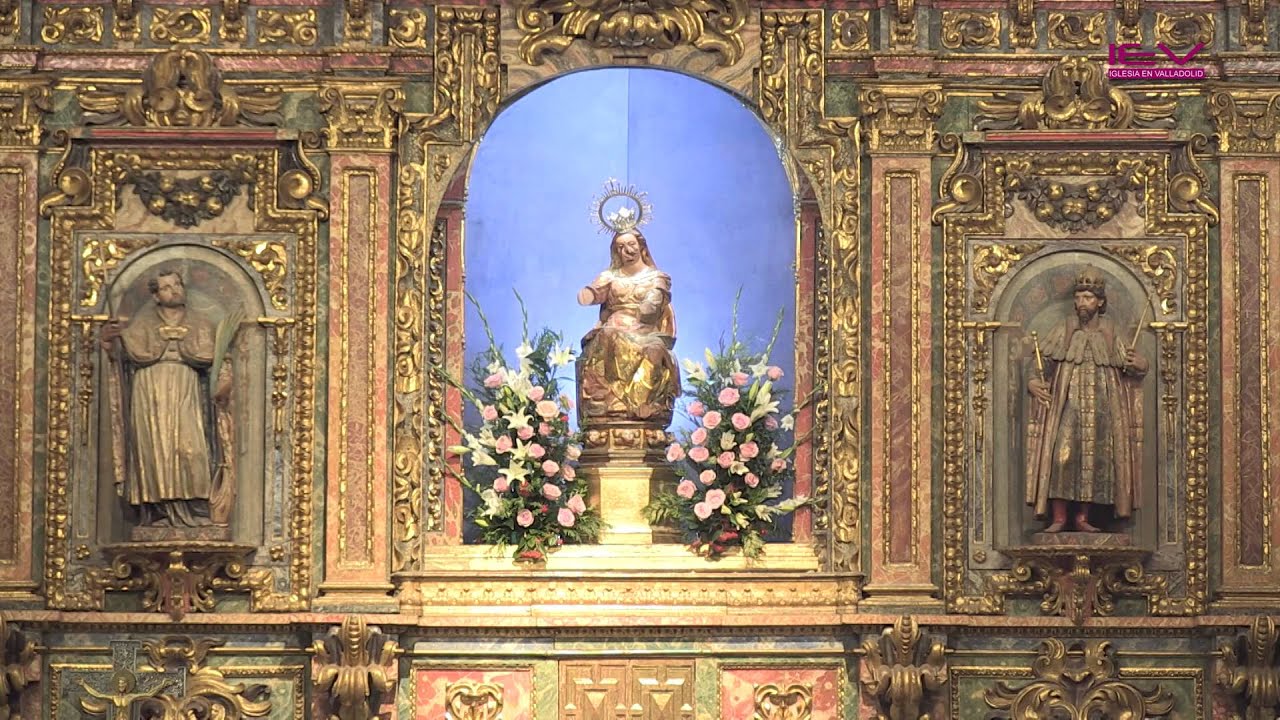
The Vulnerata, The Wounded One, was desecrated by English sailors in Cadiz in 1596, she was brought to Vallodolid in solemn procession by order of the King and is venerated in the Real Colegio de Ingleses, she is an apt reminder of the Church today.

She inspired the Holy Martyrs of the College, may devotion to her inspire us.


Borromeo: Epitomy of Trent

Ironic some celebrated the Protestant Reformation at the beginning of the week, today Holy Church celebrates Saint Charles Borromeo (1538-1584).

After the terrible period of depraved Popes and decadent churchmen there arose men like Borromeo. It must have appeared that Christ and his saints slept, I am sure many good Christians were brought near despair, then as if from the tomb Christ awoke.
"What good thing came out of the Protestant Reformation: why - the Glorious Counter-Reformation", as one Oxford preacher said a decade or two ago.

This is no idle Catholic boast, it is not just about art an architecture, it is about 'holiness'. I can't help thinking about the young Seminary Priests, leaving Rome where they might well have met St Philip Neri, St Ignatius of Loyola, St Francis Xavier perhaps, St Paul of the Cross, many travelled up through Italy to call in to see Borromeo, many would made a detour to Geneva to receive the blessing of St Francis De Salles, before coming to England or other parts of Europe to suffer death and reveal their own heroic sanctity.

In there northward journey one suspects like sought like and they would have sought out and been sought by other holy men. St Charles however seemed to hold a special place, he seemed even for his contemporaries to epitomise the Council of Trent held between 1545 and 1563, he was the model of a reforming post-Trent bishop.

There is much that Trent did but like other Councils it was expected to produce fruit, not just peace to a troubled, disunited and confused Church but also to produce a new flourishing in the Church's mission and her structures, ultimately holy men and women.

I am not sure that Vatican II, or even the foreshortened Vatican I, has produced the same fruit as Trent, there appear to be less flourishing, less saintly men and women, less zealous priests and bishops and less clear thinking members of the Papal Court than there were once.

Perhaps it is too early to tell.

Thursday, November 02, 2017

The Pontifex Maximus


.... Under this fiendish Emperor every form of torture was imagined and having been imagined was visited upon the Church of God, sparing neither the Holy Apostles themselves or clergy, man or women, even little children, widow or orphan, all were subject to the rapacious will of this Pontifex Maximus ....
... The sycophants about him, who should have stayed his hand as true friends, encouraged not only his violence but his viciousness which spared none. How low his court fell, and with them the morals of the people of Rome. For once the ruler becomes vile and corrupt soon the whole edifice is weakened and crumbles and is plunged into hatred, yes, of the Church and Christian people but also of goodness itself, so that virtue is lost and vice extolled  ...
From a sermon for St Peter and Paul by one of my predecessors, not quite sure who, in the 1920s/30

Monday, October 30, 2017

Did the Protestants win?


There is a provacative little article in the Wahington Post by a Lutheran working in various Catholic institutions entitled: The Reformation is over. Protestants won. So why are we still here? Is it true?

A Lutheran academic most probably only moves in rather restricted circles, possibly one should ask where have Protestants won? The question however provokes other questions.

Such as where do we find Catholicism?

Is it in the documents of VII, or the theology of Cardinals Cupich or Marx, or in an ecumenical gathering, or is it the congregation at weekday Mass or the Rosary Procession through London last week or is it in the millions today that would term themselves 'former Catholics' or 'of Catholic descent', who have turned their back on the Church and its teaching?


Who 'owns' or controls the Church?
Is it the 'possession' of the Pope and a small group vociferous twittering bishops, media savvy academic theologians and other clergy and journalists, or is something else?

I am no Church historian but it strikes me that Luther was the first 'theologian' in the modern sense, we had men like Aquinas and Bonaventure but they were quite different, they tried to make sense of an an already existing faith and explain it. In a sense their teaching persisted for centuries until it was actually taken up the Church, an example is Aquinas' use of 'Transubstantiation', it was only the Council of Trent that took it up as a philosophical explanation of the Real Presence, even now we can ask do we have to believe in a divide between 'substance' and 'accidents' to be a good Catholic or can we take it as analogy that explains why we prostrate before Blessed Sacrament and hold it as our greatest treasure and our contact point with God himself?

One could ague there have never been any Catholic theologians ever, even Newman (and Ratzinger at his best) were historians of theology rather than theologians in their own right, they, like good preachers tried to explain to their contemporaries an already existing faith (held always, everywhere and by all). If one follows this understanding of what a theologian is then all Catholic 'theologians' added nothing new but merely tried to bring out the treasure of the past and place it in the context of the present.

This is not what Luther or his contemporaries did, they invented something new, something personal. As soon as Protestantism emerges it is divided in itself. Luther has a different approach than Zwingli or Bucer or Calvin indeed they had savage disputes, they killed one another.

Luther himself said that before the Reformation there was one Pope sitting on seven hills, now every dung heap in Germany has its own Pope sitting on it. The creation of new 'churches' centred around particular theologians meant that princes were obliged to intervene for the sake of peace and order, so that religion became not something that somehow belonged to the people and bound them together but something imposed and regulated from above, by the 'prince'. I think until recently for example in England, atheist, nor-Christian, even Catholic Peers and Commons, actually had to vote on Church of England doctrine, and a non-Anglican, often non-believing, Prime Minister, in the name of the Queen, appointed its Bishops. Thus after the Reformation governments controlled what people believed, it became something imposed or something 'handed down', as opposed to something 'handed on'.

The Council of Trent, as a reaction to Protestantism for more or less the first time imposed a set of detailed doctrines on the glorious muddle of medieval Catholicism. Previous Councils had predominantly merely told the faithful what to avoid. Even then it is only with VII that the Catholicism becomes imposed from above, mainly in the liturgy of course, 'the Pope' or 'the Council wills it', became a standard phrase in post-Concilliar Catholicism, trumping Tradition or the feelings of ordinary Catholics, especially in liturgical 'reformation' of Vatican II was imposed with such destructive violence whereas so much else of VII was quietly rejected. For the first time the will of the Pope was seen as greater than the historic will of the rest of the Church, it seems to be attitude reaching it zenith in the present Papacy.

Authentic Catholicism is about a movement of the Spirit in the hearts of the faithful, expressed in worship and devotion. The more it is formalised, and taken away from what was taught at grandmother's knee, when it becomes the subject of documents, or individuals, even of Popes and Bishops the more Protestant it becomes, and I would suggest, therefore, the more empty our churches become.


Thursday, October 26, 2017

The Heresiarch Luther


Just one reason why I can't join the Vicar of Christ in celebration of the heresiarch Luther:
... a shocking part of Luther’s legacy seems to have slipped though the cracks of the collective memory along the way: his vicious Anti-Semitism and its horrific consequences for the Jews and for Germany itself. At first, Luther was convinced that the Jews would accept the truth of Christianity and convert. Since they did not, he later followed in his treatise, On the Jews and Their Lies (1543), that “their synagogues or schools“ should be “set fire to … in honor of our Lord and of Christendom, so that God might see that we are Christian.“ He advised that the houses of Jews be “razed and destroyed,“ their “prayer books and Talmudic writings“ and “all cash and treasure of silver and gold“ be taken from them. 
They should receive “no mercy or kindness,“ given “no legal protection,“ and “drafted into forced labor or expelled.“ He also claimed that Christians who “did not slay them were at fault.“ Luther thus laid part of the basic anti-Semitic groundwork for his Nazi descendants to carry out the Shoah. Indeed, Julius Streicher, editor of the anti-Semitic Nazi magazine “Der Stürmer,“ commented during the Nürnberg tribunal that Martin Luther could have been tried in his place. 
All the more stunning that Germany should proclaim a special national holiday in the name of the anti-Semitic Martin Luther only 70 years after the Shoah. Although the general public may mostly be unaware of Luther’s views, the responsible clergy certainly is aware and has still chosen to declare a nationwide holiday. 
It is no doubt laudable that the Synod of the Lutheran Church in Germany (EKD) distanced itself from Luther’s anti-Semitic statements in November 2011, and several other church representatives have done the same, yet how do they have no compunctions about declaring a major commemorative event to honor Luther, as if his sinister and hateful views and writings on the Jews are insignificant and trivial?
Times of Israel

The thing about the love of power and evil is that it casts out the work of sanctifying grace leavinf us thugish, corrupt and prone to all kinds of evil

The Lord’s descent into the underworld

At Matins/the Office of Readings on Holy Saturday the Church gives us this 'ancient homily', I find it incredibly moving, it is abou...