Friday, September 29, 2017

Yom Kippur Rubrics for כהן גדול


Video from Park Avenue  Synagogue -cantor Mo Glazman

Today is Yom Kippur, my felicitations to Jewish friends.

Straight from Wiki are the major rubrics concerning the כהן גדול, Kohen Gadol (High Priest) the high point was speaking the Tetragrammiton, the name of the Lord

The following summary of the Temple service is based on the traditional Jewish religious account described in Mishnah tractate Yoma, appearing in contemporary traditional Jewish prayer books for Yom Kippur, and studied as part of a traditional Jewish Yom Kippur worship service.[22]

While the Temple in Jerusalem was standing (from Biblical times through 70 C.E.), the Kohen Gadol (High Priest) was mandated by the Torah to perform a complex set of special services and sacrifices for Yom Kippur to attain Divine atonement, the word "kippur" meaning "atone" in Hebrew. These services were considered to be the most important parts of Yom Kippur because through them the Kohen Gadol made atonement for all Jews and the world. During the service, the Kohen Gadol entered the Holy of Holies in the center of the Temple, the only time of the year that anyone went inside. Doing so required special purification and preparation, including five immersions in a mikvah (ritual bath), and four changes of clothing.

Seven days prior to Yom Kippur, the Kohen Gadol was sequestered in the Palhedrin chamber in the Temple, where he reviewed (studied) the service with the sages familiar with the Temple, and was sprinkled with spring water containing ashes of the Red Heifer as purification. The Talmud (Tractate Yoma) also reports that he practiced the incense offering ritual in the Avitnas chamber.

On the day of Yom Kippur, the Kohen Gadol had to follow a precise order of services, sacrifices, and purifications:


  • Morning (Tamid) Offering The Kohen Gadol first performed the regular daily (Tamid) offering — usually performed by ordinary priests — in special golden garments, after immersing in a mikvah and washing his hands and feet.
  • Garment Change 1 The Kohen Gadol immersed in a special mikvah in the Temple courtyard and changed into special linen garments, and washed his hands and feet twice, once after removing the golden garments and once before putting on the linen garments.
  • Bull as Personal Sin-Offering The Kohen Gadol leaned (performed Semikha) and made a confession over the bull on behalf of himself and his household, pronouncing the Tetragrammaton. The people prostrated themselves when they heard. He then slaughtered the bull as a chatat (sin-offering) and received its blood in a bowl.
  • Lottery of the goats At the Eastern (Nikanor) gate, the Kohen Gadol drew lots from a lottery box over two goats. One was selected "for the Lord", and one "for Azazel". The Kohen Gadol tied a red band around the horns of the goat "for Azazel".
  • Incense Preparation The Kohen Gadol ascended the mizbeach (altar) and took a shovel full of embers with a special shovel. He was brought incense. He filled his hands and placed it in a vessel. (The Talmud considered this the most physically difficult part of the service, as the Kohen Gadol had to keep the shovelful of glowing coals balanced and prevent its contents from dropping, using his armpit or teeth, while filling his hands with the incense).
  • Incense Offering Holding the shovel and the vessel, he entered the Kadosh Hakadashim, the Temple’s Holy of Holies. In the days of the First Temple, he placed the shovel between the poles of the Ark of the Covenant. In the days of the Second Temple, he put the shovel where the Ark would have been. He waited until the chamber filled with smoke and left.
  • Sprinkling of Bull's Blood in the Holy of Holies The Kohen Gadol took the bowl with the bull’s blood and entered the Most Holy Place again. He sprinkled the bull’s blood with his finger eight times, before the Ark in the days of the First Temple, where it would have been in the days of the Second. The Kohen Gadol then left the Holy of Holies, putting the bowl on a stand in front of the Parochet (curtain separating the Holy from the Holy of Holies).
  • Goat for the Lord as Sin-Offering for Kohanim The Kohen Gadol went to the eastern end of the Israelite courtyard near the Nikanor Gate, laid his hands (semikha) on the goat "for the Lord", and pronounced confession on behalf of the Kohanim (priests). The people prostrated themselves when he pronounced the Tetragrammaton. He then slaughtered the goat, and received its blood in another bowl.
  • Sprinkling of Goat’s Blood in the Holy of Holies The Kohen Gadol took the bowl with the goat’s blood and entered the Kadosh Hakadashim, the Temple’s Holy of Holies again. He sprinkled the goat’s blood with his finger eight times the same way he had sprinkled the bull’s blood. The blood was sprinkled before the Ark in the days of the First Temple, where it would have been in the days of the Second Temple. The Kohen Gadol then left the Kadosh Hakadashim, putting the bowl on a stand in front of the Parochet (curtain separating the Holy from the Holy of Holies).
  • Sprinkling of blood in the Holy Standing in the Hekhal (Holy), on the other side of the Parochet from the Holy of Holies, the Kohen Gadol took the bull's blood from the stand and sprinkled it with his finger eight times in the direction of the Parochet. He then took the bowl with the goat's blood and sprinkled it eight times in the same manner, putting it back on the stand.
  • Smearing of blood on the Golden (Incense) Altar The Kohen Gadol removed the goat’s blood from the stand and mixed it with the bull's blood. Starting at the northeast corner, he then smeared the mixture of blood on each of the four corners of the Golden (Incense) altar in the Haichal. He then sprinkled the blood eight times on the altar.

Cliffs of Mount Azazel
  • Goat for Azazel The Kohen Gadol left the Haichal and walked to the east side of the Azarah (Israelite courtyard). Near the Nikanor Gate, he leaned his hands (Semikha) on the goat "for Azazel" and confessed the sins of the entire people of Israel. The people prostrated themselves when he pronounced the Tetragrammaton. While he made a general confession, individuals in the crowd at the Temple would confess privately. The Kohen Gadol then sent the goat off "to the wilderness". In practice, to prevent its return to human habitation, the goat was led to a cliff outside Jerusalem and pushed off its edge.
  • Preparation of sacrificial animals While the goat "for Azazel" was being led to the cliff, the Kohen Gadol removed the insides of the bull, and intertwined the bodies of the bull and goat. Other people took the bodies to the Beit HaDeshen (place of the ashes). They were burned there after it was confirmed that the goat "for Azazel" had reached the wilderness.
  • Reading the Torah After it was confirmed that the goat "for Azazel" had been pushed off the cliff, the Kohen Gadol passed through the Nikanor Gate into the Ezrat Nashim (Women’s Courtyard) and read sections of the Torah describing Yom Kippur and its sacrifices.
  • Garment change 2 The Kohen Gadol removed his linen garments, immersed in the mikvah in the Temple courtyard, and changed into a second set of special golden garments. He washed his hands and feet both before removing the linen garments and after putting on the golden ones.
  • Offering of Rams The Kohen Gadol offered two rams as an olah offering, slaughtering them on the north side of the mizbeach (outer altar), receiving their blood in a bowl, carrying the bowl to the outer altar, and dashing the blood on the northeast and southwest corners of the Outer Altar. He dismembered the rams and burned the parts entirely on the outer altar. He then offered the accompanying mincha (grain) offerings and nesachim (wine-libations).
  • Musaf Offering The Kohen Gadol then offered the Musaf offering.
  • Burning of Innards The Kohen Gadol placed the insides of the bull and goat on the outer altar and burned them entirely.
  • Garment change 3 The Kohen Gadol removed his golden garments, immersed in the mikvah, and changed to a new set of linen garments, again washing his hands and feet twice.
  • Removal of Incense from the Holy of Holies The Kohen Gadol returned to the Holy of Holies and removed the bowl of incense and the shovel.
  • Garment Change 4 The Kohen Gadol removed his linen garments, immersed in the mikvah, and changed into a third set of golden garments, again washing his hands and feet twice.
  • Evening (Tamid) Offering The Kohen Gadol completed the afternoon portion of the regular (tamid) daily offering in the special golden garments. He washed his hands and feet a tenth time.
The Kohen Gadol wore five sets of garments (three golden and two white linen), immersed in the mikvah five times, and washed his hands and feet ten times. Sacrifices included two (daily) lambs, one bull, two goats, and two rams, with accompanying mincha (meal) offerings, wine libations, and three incense offerings (the regular two daily and an additional one for Yom Kippur). The Kohen Gadol entered the Holy of Holies three times. The Tetragrammaton was pronounced three times, once for each confession.

Thursday, September 28, 2017

To Sign or Not to Sign


I have been asked to sign the Filial Correction, I signed the letter of the 45 academics and pastors last year, and almost immediately found Cardinal Nichols' tanks parked on my lawn to inform me of his displeasure, which was quite mild unlike other lay signatories, who were sacked from their jobs in Catholic institutions for their pains, Dr. Josef Seifertis being the most high profile. I admit it, I am afraid to sign and I know other priests who share my fear. Many of those who might have signed have in the last four years have a certain fear about their place in the Church.

Rome and those surrounding the Pontiff have certainly become more vicious in defending him, never ever engaging in intellectual arguments, merely attacking like ravenous wolves or child bullies those who pose questions. The climate is bad throughout the Church, in Rome it is positively toxic. Under Francis the Vatican has become a place of fear and arbitrary oppression, there was a public glimpse of that in the sacking of Cdl Mueller by the Pope, and earlier in the dismissal of a couple of priests from the CDF and amongst laymen of Libero Milone, former Auditor General and many others. It is not just in theology that 2+2=5, or whatever number the Pope chooses that day, it extends to morality and ordinary human decency, ultimately it is a serious attack on the rationality of the Catholic faith and intellectual rigour.

The abusive attacks on any one who asks legitimate filial questions or even of people like Cardinal Burke and the other "Dubia Cardinas" or even Cdls Sarah or Mueller  by the likes Austen Ivereigh, Rosica or Spadaro merely echo the statements of the notoriously immoderate Cardinal Madriaga the senior member of the Pope's Council of Nine or the shocking insults always aimed at faithful Catholics by the Pope himself. Let us not even go to the shenanigans and manipulation surrounding the Synod on the Family

The men who rule the Church are not even in the worldly sense good, as the former Prefect of the CDF has said "power has become more important than truth". It would be easy to dwell on the gay chem-sex parties hosted in the Vatican City itself and the advancement of those with a gay agenda, which produces apparently no reaction, not even a dismissal. In the matter of financial mismanagement and corruption, there appears to be window dressing masking inaction, John Allen seems to think this is the big issue above others. In fact, maybe because Francis centralises and 2+2 = whatever he decides, many of those in Rome suggest things have never been worse, a 'kingdom of brigands' as one former Nuncio described it.

Dioceses are not Rome but they do reflect Rome, Cardinals and bishops intimidate clergy and others who are faithful, if Francis has done anything it is to highlight a deep rift in the Church, marked by the quite extraordinary rise of an Ultramontane/Liberal faction against those who are faithful. Many bishops, who are often chosen for not for fidelity to Christ nor depth of learning nor moral fibre, not even their pastoral abilities but for their admin skills are quite happy to side with that faction which has power at the moment, moving Vicar of Bray-like from convinced Wojtyłaians to Ratzingeriansw to Bergoglianians..

Therefore one of the chief reasons for my reticence in signing is my fear and cowardice.

Another reason is that I like any other Catholic have a deep reverence for the person of the Sovereign Pontiff, it is not Ultramontane and unquestioning but I have a problem in directly accusing him of heresy or of promoting it, or even of tolerating it. Some might say the evidence is overwhelming, I can't dispute that but there is a bit of me that hopes against hope, because frankly having a Pope who is heretical, promoting or tolerating heresy is so horrific for the Church I would prefer to put off admitting it. I feel more comfortable with that idea that the Pope is weak, ill, manipulated by his ministers. Certainly, the days of John Paul inadvertently misspeaking and ordering the destruction of whole editions of L'Osservatore are long gone with the coming of the internet.

I admire those who have signed, a friend who has signed said the question is WWSJFSTMD, What Would St John Fisher and St Thomas More Do?

At the moment I am like the majority of the priests I know, who remain silent and praying that the question is not put to them,

I know it is not worthy of Christ, conscience says one thing, fear and self-serving, what some might call prudence, says something else.

Tuesday, September 19, 2017

The House Falls and the Sensus Fidelium


I am sure there have been psycho popes in the past, as much as there have been a few heretical ones, as there have been downright wicked ones.

Quite recently there was quite a lot of talk on the web, not from serious media though, of ‘schism’. I suspect there was a feeling that somehow the “dubia cardinals” would rise up and by some strange legal act would create a new pope. There was also discussion of the invalidity of Pope Francis’ election that was pure nonsense. 

Pope’s theologically hold office by popular acclamation and acceptance by the Church of Rome and the bishops and clergy throughout the world, how they get there isn’t that important. 'Legality' doesn't quite enter into it, in the past armies have, as have bribery or imprisonment and torture of opposing Cardinals. Simple question: who do we pray for at Mass? Except for odd people it’s Jorge Bergoglio reigning as Pope Francis. There is no other Pope.

I am told that the old question Suarez and others raised about the deposition of a Pope has become a popular subject for doctoral study in certain Canon Law faculties. There was a conference on it in Paris recently.

I am not sure that the relationship of Church and pope works quite so cleanly, especially today. A proper understanding of the sensus fidelium gives a clue. “The sheep that belong to me listen to my voice …… And a stranger will they not follow, but will flee from him: for they know not the voice of strangers.” It is not a formal act that separates the sheep from the stranger, it is simply they don’t hear him. In the same way that the people heard Jesus and didn’t hear the scribes and pharisees because “he spoke with authority”.  In the same way “one cannot pick figs from thorns”, and houses built on sand will fall and lamps hidden under tubs do not give light to the house, one can tell a tree by its fruit.

Schism does indeed have a legal definition but the main problem is that our churches, our seminaries, our convents are empty, people aren't marrying. Though people might turn out in vast numbers to see the spectacle of a pope in the streets of Bogata on a Brazilian beach in reality they simply don’t hear him. It is the same with bishops and priests: the sheep do not hear them or follow them.

This is what “schism” is really about in modern times, it is not sharp division of ecclesiastical institutions but lapsation, a refusal or inability to hear the Church’s leadership.  Like the scribes and Pharisees, separated from Christ, they have no authority. Speaking in their own voice they have nothing to say. In fact as we see today in surveys bishops are mistrusted even more than local priests, when they are true pastors they are effective and loved but so often they have merely an administrative role distinct from the word of God.

There has been a lot talk about the older form of the Mass and Orthodoxy attracting young people, I think this is true, or at least it produces vocations and committed Catholics but it is not necessarily something to celebrate, it appears to be attractive because the rest of the Church is failing.

Like older form of Mass, the older form catechesis, of preaching, or living as a priest or even being Church is all linked to the fons et culmen the Mass. Change the rites and the theological ground is changed, rock can easily become swamp or quicksand, and the house .... it falls.


Tuesday, September 12, 2017

Pope mobile doesn't stop


In this video the 'pope mobile'  almost runs over someone who gets in the way rather than stopping to check on whether the man is injured or not, it continues on its way.

I don't know whether the pope's chauffeur is the same one who braked abruptly and caused the Pope to fall and cut his face, which was widely reported.

What I find surprising is the lack of media attention to this event and the lack of concern over the man. Perhaps things are different Columbia, in the rest of the world a vehicle that is involved in an accident would be expected to stop and even if the law doesn't, charity does.


Saturday, September 02, 2017

Going into Reverse


Reverse gearThe Servus Servorum Dei recently said to a meeting of Italian liturgists, regarding the liturgy, that with his magisterial authority he declared post-concilliar liturgical changes are ‘irreversible’. As with many of the things he says, I am left wondering quite what he means, or even whether it contained any meaning at all.

It is a truism surely, what has happened in the past can't be reversed; an act of iconclasm cannot be undone, a smashed statue might be glued together but it still bears the marks of the violence done to it, and the community (like Italian liturgists) accustomed to violence seem to have that tendency in their psychological make-up, even a great deal of psychotherapy or analysis won't effect a cure, the only cure is a biological solution, the passing away of a generation.

The thing is that so much of the 'innovations' of the 1970s/80s rather than appealing to the young or even the middle-aged nowadays, chase them away. Again, again though the Pope says their is no reversal we do see bishops reversing what their predecessors did; in England and Wales, we've had a return to meatless Fridays and this week two of or Holy Days have been restored to their proper dates. It might indeed be that most Catholics haven't realised  the sinfulness of a bacon sandwich and it will take sometime to return to full churches on a Holy Day but this strikes me as being a reversal.

May our bishops having discovered the reverse gear, use it frequently! Bless them.


CONGREGATION FOR DIVINE WORSHIP AND THE DISCIPLINE OF THE SACRAMENTS Prot. No. 180/17 ENGLAND AND WALES
To His Eminence, Cardinal Vincent Nichols, Archbishop of Westminster, President of the Bishops’ Conference of England and Wales, having taken into consideration the letter received on 21st February 2017, by virtue of the faculty attributed to this Congregation by the Supreme Pontiff FRANCIS, we willingly grant that in future, in the calendar specific to the same Conference, the celebration of the solemnity of the Ascension of the Lord will be celebrated on its particular day, namely, forty days after Easter; the celebration of the Epiphany of the Lord on its particular day, namely, 6th January. When the solemnity of the Epiphany of the Lord falls on a Saturday, it is to be assigned to the Sunday following; when on a Monday, to the Sunday preceding. All things to the contrary notwithstanding.
From the offices of the Congregation for Divine Worship and the Discipline of the Sacraments,
4th August 2017, on the feast of St John Mary Vianney, presbyter.
Robert Card. Sarah Prefect
+Arthur Roche Archbishop Secretary

Saturday, August 19, 2017

The Future?

I had a visit from a former parishioner who is now a brother of one of the new Oratories. Oratories seem to be on the rise. Birmingham and London have existed since the 19th century but almost 30 years ago Oratorians took over St Aloysius in Oxford and a the failing Jesuit church began to thrive. In recent years bishops have entrusted churches in York, Bournemouth and Cardiff to them. No-one would dispute that the Oratories have a very distinct flavour, even the new ones; there is what some might suggest is a certain dustiness about them. a tendency, even if most of their Masses are Novus Ordo to look to ‘Tradition’, they, like St Philip Neri, tend to look to the formation of young men in doctrine and liturgy, in both Cardiff and Bournemouth part of their mission is acting as chaplains to the universities.

The Oratories are part of a trend, in Preston both the Institute of Christ the King and the Fraternity of St Peter have been given churches where others have failed, so too in New Brighton. It might be that these bishops are acting in desperation and simply want museum curators for huge but splendid old churches that they cannot find the manpower to cover. Yet these institutes are happy to take them on, they have plenty of other offers round the world but they feel they can turn these churches into mission centres, that what others have fail at doing they can succeed.

I have another young friend, again a former parishioner, who will be ordained priest next year, he studied at Econe, his large family are staunch supporters of the Fraternity, one of his brothers is also a seminarian and a sister is a Dominican novice. I am rather saddened that the FSSPX have chosen to close their chapel here in Brighton but that is not the general trend, they are growing:
635 priests,
215 seminarians
40 pre-seminarians,
117 religious brothers
79 oblates
The priests live in 165 priories in 32 countries and have 772 centers in 72 countries around the world. I don't know many of their priests but those I have met seem to be, rather than having two heads, or as they are often pictured anti-Semitic sede vacantists, rather normal young men with a passion for the mission of Christ and his Church.

This year it was reported that a quarter of all ordinations in France were of 'traditional priests' which presumably means they were ordained in the traditional rite but then one is led to suspect that the majority of the rest also had traditional sympathies.

As most dioceses, most religious congregations are contemplating decline or even closure, (most priests throughout the western world have a sense they will be the last in their parishes) we should be asking if we have anything to learn from the traditional and radically orthodox. and asking ourselves too why the Church that some might describe as the "Church of yesteryear" seems to be about mission when the "Church of today" is concerned with maintenance and is in general quite unsuccessful at that.

Friday, August 18, 2017

Catholics, go out and change Britain!

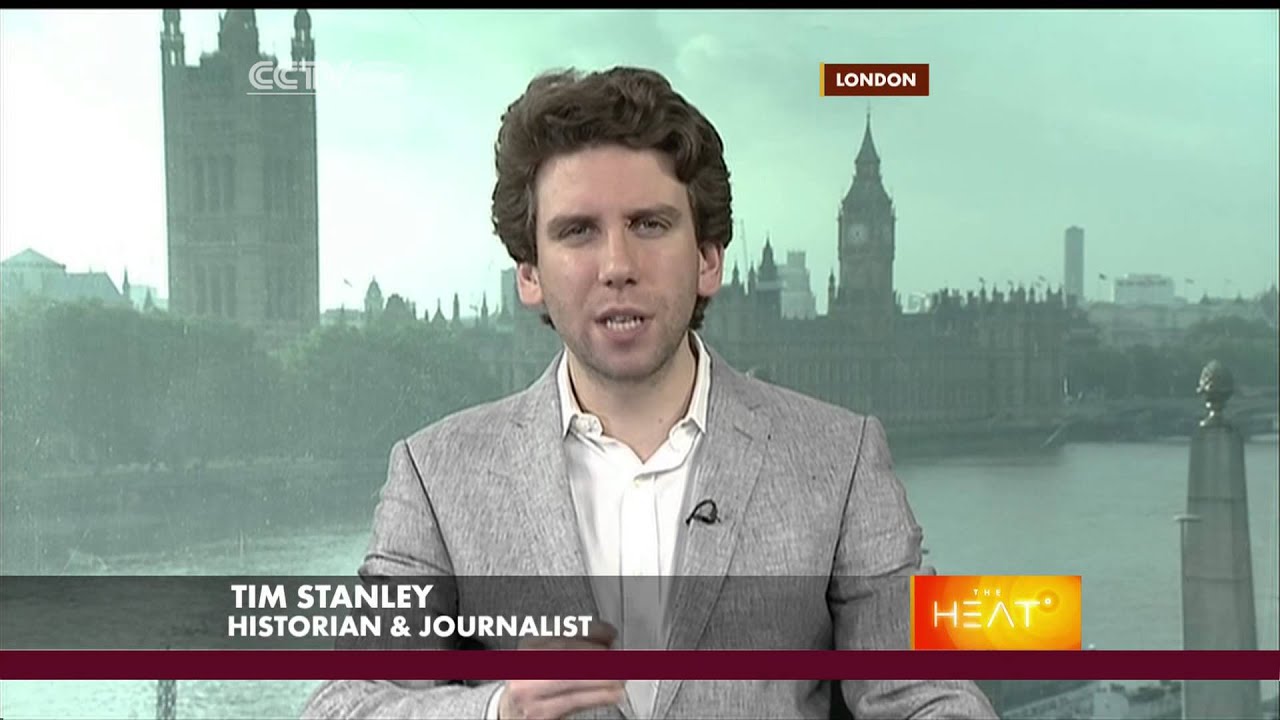
This is a brilliant piece by Tim Stanley, one of our former parishioners and servers at our Traditional Mass. It is a clarion call for us Catholics to speak out and change Britain
First, that we are called to be outspoken social critics. Second, that our witness will personally cost us dear.
Catholic conservatism is pretty barren, even more so than liberalism, the first looks back to a golden age a few years ago and has no imagination, the latter offers imagination and takes its lead from secularism but orthodoxy and traditionalism places us in the mainstream of a cast of mind that begins in the Incarnation and enables us to look at our society and condemn current evils but also offers a vision of what the future, a Christian future could be.

Tim offers a vision of a society that the social encyclical of the Pope's of the last hundred years present, that was rooted in the scriptures and the Fathers. As Catholics we have a vision of a society that is radically different to the shallow anaemic ideologies of today's politicians.

Tim talks about the great social evils of our day, about poverty and financial disparity, porn and the sexualisation of our children, the damage to relationships , to mental health, to understanding ourselves, the evils of abortion and euthanasia, but go read .....

... Our wonderful, glorious, immaculate Church – the Bride of Christ, the hope of mankind.
She is like the mother we take for granted (and every mother will tell you: “You take me for granted!”). Do we do enough for her? Enough is never enough. Do we go every Sunday? Do we confess our sins as regularly as possible? Do we pray? Do we venerate the precious sacraments? Do we really listen to what the Pope says? Are we doing enough to support our priests? And what are we doing to add to their flock?
If we want to transform our society, let us transform our Church – nurture it, help it to grow, bring it more souls. The way to do that is to live openly as a Catholic. Talk to people about it. Explain why you’re not eating meat on a Friday and what Christmas really means to you. Decorate your office space with pictures of saints. Tell people you’re going to pray for them: it will comfort the needy and irritate the blasphemous. Transform society by being openly, nakedly, a Christian to those around you, and not being frightened either by their curiosity or their hostility.
And, most of all, Catholics need to do something that has become counter-cultural in the 21st century: have as many babies as possible. Raise an army of Catholics. Send them out to fight.
That’s how we win: we throw ourselves into the battle with a courage that saves us and the people we encounter. It is a matter of living with integrity. To quote St Catherine of Siena: “If you are who you are meant to be, you will set the world on fire!”
I say again go read ..;
Or even buy the Catholic Herald this week.

Personally, I would give Tim a voice on the Bishop's Conference or put him in charge of Catholic Voices, but then he is a convert ....

The Lord’s descent into the underworld

At Matins/the Office of Readings on Holy Saturday the Church gives us this 'ancient homily', I find it incredibly moving, it is abou...