Saturday, August 19, 2017

The Future?

I had a visit from a former parishioner who is now a brother of one of the new Oratories. Oratories seem to be on the rise. Birmingham and London have existed since the 19th century but almost 30 years ago Oratorians took over St Aloysius in Oxford and a the failing Jesuit church began to thrive. In recent years bishops have entrusted churches in York, Bournemouth and Cardiff to them. No-one would dispute that the Oratories have a very distinct flavour, even the new ones; there is what some might suggest is a certain dustiness about them. a tendency, even if most of their Masses are Novus Ordo to look to ‘Tradition’, they, like St Philip Neri, tend to look to the formation of young men in doctrine and liturgy, in both Cardiff and Bournemouth part of their mission is acting as chaplains to the universities.

The Oratories are part of a trend, in Preston both the Institute of Christ the King and the Fraternity of St Peter have been given churches where others have failed, so too in New Brighton. It might be that these bishops are acting in desperation and simply want museum curators for huge but splendid old churches that they cannot find the manpower to cover. Yet these institutes are happy to take them on, they have plenty of other offers round the world but they feel they can turn these churches into mission centres, that what others have fail at doing they can succeed.

I have another young friend, again a former parishioner, who will be ordained priest next year, he studied at Econe, his large family are staunch supporters of the Fraternity, one of his brothers is also a seminarian and a sister is a Dominican novice. I am rather saddened that the FSSPX have chosen to close their chapel here in Brighton but that is not the general trend, they are growing:
635 priests,
215 seminarians
40 pre-seminarians,
117 religious brothers
79 oblates
The priests live in 165 priories in 32 countries and have 772 centers in 72 countries around the world. I don't know many of their priests but those I have met seem to be, rather than having two heads, or as they are often pictured anti-Semitic sede vacantists, rather normal young men with a passion for the mission of Christ and his Church.

This year it was reported that a quarter of all ordinations in France were of 'traditional priests' which presumably means they were ordained in the traditional rite but then one is led to suspect that the majority of the rest also had traditional sympathies.

As most dioceses, most religious congregations are contemplating decline or even closure, (most priests throughout the western world have a sense they will be the last in their parishes) we should be asking if we have anything to learn from the traditional and radically orthodox. and asking ourselves too why the Church that some might describe as the "Church of yesteryear" seems to be about mission when the "Church of today" is concerned with maintenance and is in general quite unsuccessful at that.

Friday, August 18, 2017

Catholics, go out and change Britain!

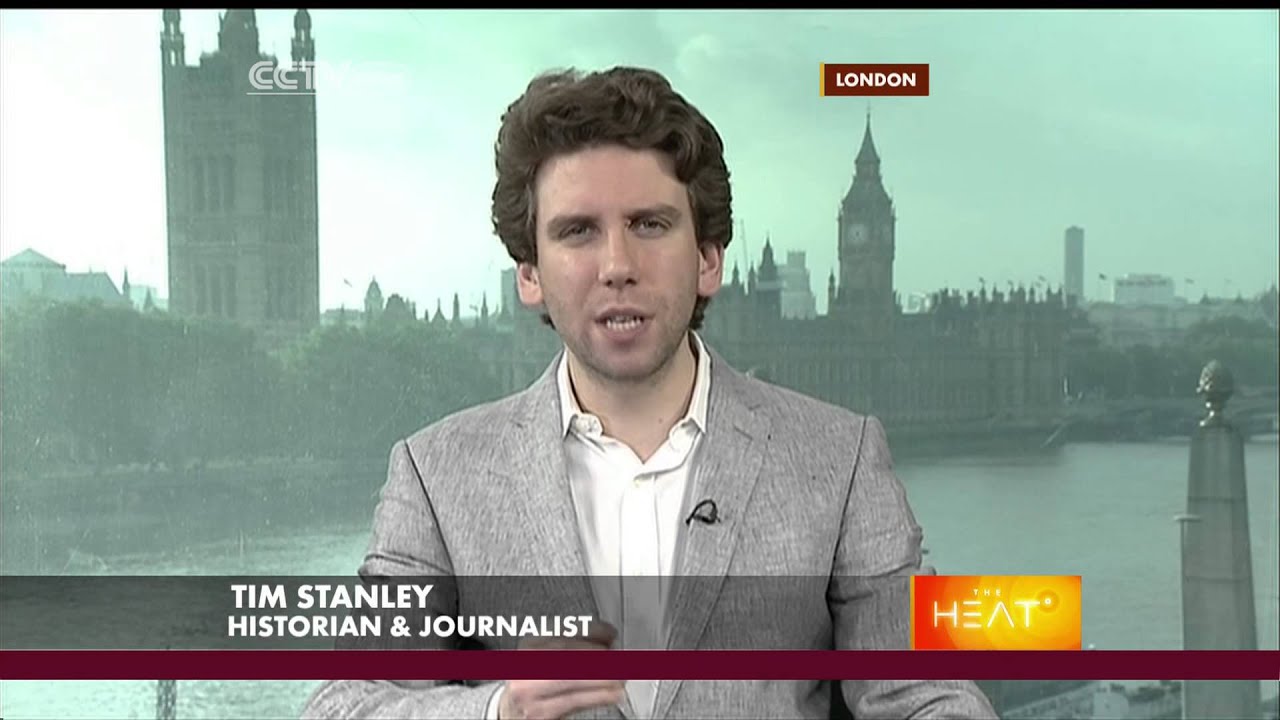
This is a brilliant piece by Tim Stanley, one of our former parishioners and servers at our Traditional Mass. It is a clarion call for us Catholics to speak out and change Britain
First, that we are called to be outspoken social critics. Second, that our witness will personally cost us dear.
Catholic conservatism is pretty barren, even more so than liberalism, the first looks back to a golden age a few years ago and has no imagination, the latter offers imagination and takes its lead from secularism but orthodoxy and traditionalism places us in the mainstream of a cast of mind that begins in the Incarnation and enables us to look at our society and condemn current evils but also offers a vision of what the future, a Christian future could be.

Tim offers a vision of a society that the social encyclical of the Pope's of the last hundred years present, that was rooted in the scriptures and the Fathers. As Catholics we have a vision of a society that is radically different to the shallow anaemic ideologies of today's politicians.

Tim talks about the great social evils of our day, about poverty and financial disparity, porn and the sexualisation of our children, the damage to relationships , to mental health, to understanding ourselves, the evils of abortion and euthanasia, but go read .....

... Our wonderful, glorious, immaculate Church – the Bride of Christ, the hope of mankind.
She is like the mother we take for granted (and every mother will tell you: “You take me for granted!”). Do we do enough for her? Enough is never enough. Do we go every Sunday? Do we confess our sins as regularly as possible? Do we pray? Do we venerate the precious sacraments? Do we really listen to what the Pope says? Are we doing enough to support our priests? And what are we doing to add to their flock?
If we want to transform our society, let us transform our Church – nurture it, help it to grow, bring it more souls. The way to do that is to live openly as a Catholic. Talk to people about it. Explain why you’re not eating meat on a Friday and what Christmas really means to you. Decorate your office space with pictures of saints. Tell people you’re going to pray for them: it will comfort the needy and irritate the blasphemous. Transform society by being openly, nakedly, a Christian to those around you, and not being frightened either by their curiosity or their hostility.
And, most of all, Catholics need to do something that has become counter-cultural in the 21st century: have as many babies as possible. Raise an army of Catholics. Send them out to fight.
That’s how we win: we throw ourselves into the battle with a courage that saves us and the people we encounter. It is a matter of living with integrity. To quote St Catherine of Siena: “If you are who you are meant to be, you will set the world on fire!”
I say again go read ..;
Or even buy the Catholic Herald this week.

Personally, I would give Tim a voice on the Bishop's Conference or put him in charge of Catholic Voices, but then he is a convert ....

Tuesday, August 08, 2017

Clergy wit


Fr Hunwicke recently used the word 'mingent', which some of those who commented on his blog didn't understand, It reminded me of a priest friend in my diocese, long since dead, who suggested 'mingency' could be a collective noun for clergy though he would also use it of the twenty years his predecessor's time in his parish, as in "during the mingency of Fr  ...."  ,

Clergy can be a bit acerbic, as well as witty about their superiors, here are few examples lest they be forgotten:


  • A miter: an artificial extension of a natural vacuum.
  • An auxiliary bishop: A theological nonentity.
  • An auxiliary bishop:The bishop's perpetual curate.
  • An auxiliary bishop: The real bishop's bully boy / bouncer.
  • Monsignor/Canon: a title to put on an envelope to impress the postman.
  • Monsignor/Canon: a title that denotes years of brown nosing that has ended in failure.
  • Being made a Canon: a kind way for a bishop to suggest retirement.
  • Of a deposed bishop: In my day he wouldn't have made his first confession let alone been consecrated bishop.
  • Of a new bishop: He intends to re-order the cathedral by replacing his predecessors' fence with his own particular throne.
  • A bishop symbolised by a singular cross, an archbishop a double-cross
  • A note to his bishop after a priest's burial, "My Lord, you have let me down for the last time".

Saturday, August 05, 2017

Gay Bullying

In Brighton today is 'Pride Day' and it looks as if it is going to rain on the various civic parties tonight.

I just met a young man Muslim who works for Sainsbury's, he was very upset because he was forced to wear one of these tee shirts. He didn't protest he wants to work.

The National Trust has been forced to lay off of bullying its volunteers, maybe our retailers might follow suit.

I tend to listen to a lot of BBC's Radio 4. I feel bullied, recently, every day there has been at least one programme glorying in homosexuality, one is actually called 'Gay Britannia'. Perhaps it is English sexual prurience but homosexuality seems more prominent even than heterosexuality on the BBC. It is surprising since only 2% of people self identified as homosexuals in the last census, perhaps in the artistic 'community' the figure is much higher than the national average but I wish they would just get on with their lives - quietly, like everyone else.


Friday, August 04, 2017

The Russian Revival

I can't help wondering what would have happened if we didn't have the liturgical reforms of the 60s/70s, there is nothing within the Catholic Church to help answer the question except Fr Montgommery-Wright's parish in France and the diocese of Campos in Brazil, where there were no loss in numbers, the working class seem to have remained faithful, both were headed by exceptional and somewhat eccentric clergy.

Perhaps the the Orthodox world might offer a clue, in Greece the decline though not as dramatic as in the Latin West seems to follow the same general decline but in Russia things are quite different. According to a recent Pew Forum survey over 70% of Russians identify as Orthodox. I remember a time when there were cities without a single open Church and Moscow and Leningrad (now St Petersburg) a solitary priest offered the liturgy in almost derelict cold churches for a few elderly women.

One must remember that many of the Russian Church's structures are the same as before the Revolution 100 years ago, they haven't undergone the changes that affected the West. The liturgy is of course unreformed and in Church (or old) Slavonic.

A friend of mine, a Greek bishop, who was recently a guest of the Patriarch of Moscow saw a Church which was quite different, the churches he was taken to were revitalised, full of young men and women on Sunday's and feast days, he visited four of the Moscow seminaries each with between 300 and 400 hundred seminarians. In formerly atheistic Russia there are now chaplains in the military and even in schools. There are huge outdoor processions and services and the number of baptisms increases year after year. Monasteries and convents once derelict are now filled with monks and nuns.

Obviously, Putin has used the Russian Church to construct the narrative of Holy Mother Russia after years of Soviet destruction not only of the economic and social infra-structure of Russia but also of the souls of individual Russians. It is worth remembering that at one time during the Soviet era women had an average of seven abortions in their life time, leaving Russia under populated.

I often wonder if Our Lady has appeared to young shepherd somewhere in Russia and has asked for the Consecration of, and prayers for the Conversion of the West. Perhaps when we realise that the West is in a similar situation to the Soviet Union in the 1980s our political leaders might realise the rediscovery of Christian Europe could offer it a form of moral regeneration, unless of course they turn to Islam.

Tuesday, July 25, 2017

Tradition: A theology from below


A few quick thoughts on Cardinal Sarah and mutual enrichment. I think the Cardinal is perhaps one of the most impressive spiritual writers of today, he is brave when others are craven – but he seems not to understand the nature of ‘Tradition’.

‘Tradition’ will always be regarded as dangerous, especially in an increasingly monarchical Church. It is not a movement, it is something below a movement, it is grass roots thing. Those who have respect for ‘Tradition’ should also have respect for the hierarchical structure of the Church but ‘Tradition’ is something beyond that. It might well be signified by a love for the Old Mass but it is more than that, after all what is the ‘Old Mass’? It is something which in the end ended a process of an organic development which ended with Missal of Blessed John XXIII in 1962, hence the attachment to that Missal but it is more than that.

‘Traditionalists’ are unhappy about the Cardinals suggestions for mutual enrichment, fine to introduce elements of the Old Rite into the New Rite but to do things the other way round is unacceptable. ‘Traditionalist’, many of whom have difficulty with certain aspects of Vatican II that are out of keeping with let’s say Newman’s theory of the development doctrine look to another age and another type of ecclesiology, something which arises from below, from forgive me for returning yet to him, St Vincent of Lerrins’, "Quod ubique, quod semper, quod ab omnibus, creditum est." Or in English, "That which has been believed everywhere, always, by all people."

There is a tension coming to the fore in this Pontificate, amplified in part by Amoris Laetitia but its strong centralism too, and imposition of doctrine from above, with something far more pneumatological, the slow gentle movement of the faith amongst the grassroots of the faithful which is the real ‘theology from below’. It is something which Catholics have always understood from scripture about the working of the Holy Spirit, that he leads the Church into deeper understanding of the faith as he does through popular movements as much as he does through Papal or Episcopal interventions, indeed he does this in the reception by the faithful of Papal or Episcopal doctrine.

It might be necessary at times for Pope’s to interfere in the day to day running of individual diocese, or in the life of the whole Church but this is as Vatican I’s  Dogmatic Constitution Pastor Aeternus indicates, something to be exercised when the unity of the Church is threatened, not the normal function of the Sovereign Pontiff. It obviously demands that the Pope is indeed a servant and bishops see themselves as sharing in his apostolic office, essentially being faithful bearers of the Tradition, they too are given authority to bind and loose, the difference is Peter’s role in maintaining unity amongst his Apostolic brothers, at no time except in the hundred years or so has he been an innovator.

Monday, July 24, 2017

The Reception of Pope Francis


I am not sure, like most Catholic clergy nowadays, that the Orthodox are not Catholic or part of the Catholic Church, as one might say the churches founded in the sixteenth century are not, or those without valid sacraments are not. Of course those who receive baptism are always in some sense part of the Catholic Church, even if after baptism they go into schism. With the 'two lung' theory one might suggest that the Catholic Church itself is deficient without a unity of East and West and the Orthodox would say the same, hence the reaching out of East and West.

In practice one could even suggest that the Great Schism of 1054 only came into effect in 1870 with Vatican I. Until then there seemed to a fair degree of inter-communion, even the acceptance of mutual jurisdiction, Orthodox nuns sought out Jesuit confessors, even Orthodox declarations of marriage dissolution/divorce* were often accepted in most parts of Italy and most of parts of the Catholic world east of Italy. And although as in the Eucharist we might have expressed our theology very differently that these expressions were actually cultural rather than actually an expression of different beliefs, ultimately we could both say, "this is Jesus".

Yesterday I was listening to Austin Ivereigh on the BBC, the self appointed Papal apologist, who was speaking about the 'reception or non-reception' of Amoris Laetitia and the Holy Father's teaching or even reign and in Saturday's L'Osservatore there was this fascinating article which speaks of the Italian clergy, high and low opposing Francis. The inference being the Pope was a goody the clergy baddies and ignorant too. Historically that is not how the Church works and this article will probably only serve to highlight the isolation of the Pope and encourage others to speak about it.

I rarely agree with Ivereigh, I often wonder if the Pope does but I think that his reference to'reception' is important. In the West we have a very feudal and increasingly from the US a presidential attitude to authority, which sees it coming down from above and is imposed on those below. The Orthodox approach is I suspect a little more 'Catholic', certainly patristic, it is that Councils and Bishops teach but this is their teaching not the Church's belief until it is accepted by the whole Church (St Vincent of Lerrins, Catholic faith is that believed always, everywhere and by all).

Thus 'The Faith' is the belief of the whole Church and certainly not a few of its hierarchy. Indeed a Pope or Bishop cannot identify themselves as the Church they are ultimately as significant or insignificant as anyone else. Newman interestingly wrote after Vatican I that what the non placet party did and what happened to them was of great importance, obviously he was interested in the long term reception of the teaching Vatican I, post Vatican II we might be thinking not of Old Catholics but of the East too.

In the early days of this Pope's reign when he so often described himself not as Pope but as Bishop of Rome I thought that we might move to an understanding papacy acceptable to the lungs of both East and West, in line with Patristic teaching, and what I would say was in line with truly Catholic sentiment. A bishop has authority only because he acts in communion with his diocese and with the Church Catholic (the Church in Heaven and on Earth). The Bishop of Rome is no different, indeed than being President of the Church or even its monarch he is the servant of the servants, a title little used nowadays.

I have been bashed by a notorious sedevacantist recently; no rational person would question the election of Francis, he is Pope, despite the manipulations of the St Gallen group. What is a much more a Catholic concern is the acceptance of Francis' teaching, ultimately how the Church will remember him, indeed if it will remember him at all or as little more than a brief historical throwback or curio. Remembering or not remembering is how the Western Church really deals teaching from above, from Councils, Popes and Bishops.

If the L'Osservatore article is correct, and there is no reason to imagine that it is not, or that it is just reserved to Rome or Italy, it would seem that despite popular acclaim of journalists and those outside or the edge of the Church that the clergy as it says 'high and low' -and presumably the committed laity- will quickly forget Francis, most of them of course will still continue when Francis moulders silently in his tomb amongst his predecessors.

 'In the end the Lord wins'.


 *On the Orthodox divorce practice, I had a discussion with an Orthodox priest who said, it was practice of Orthodoxy but not its belief because it was plainly contrary to scripture and contrary to Orthodox practice, generally, of lifelong loving Orthodox marriages and therefore it could not be deemed 'accepted or received Orthodox teaching'.

The Lord’s descent into the underworld

At Matins/the Office of Readings on Holy Saturday the Church gives us this 'ancient homily', I find it incredibly moving, it is abou...